Glass Catfish
Kryptopterus bicirrhis
Also known as: ghostfish, Indian glass wels
The living ghost: almost entirely see-through and best kept in a school.

About
The glass catfish (Kryptopterus bicirrhis) comes with an important caveat for anyone who has kept what they thought was this species before: much of the aquarium trade has historically sold a close relative, K. vitreolus, under this name. The real K. bicirrhis is actually not transparent in life, which is the quickest way to tell them apart. It is a mid-sized catfish native to large river systems across Southeast Asia, including the Mekong and Chao Phraya basins, the Malay Peninsula, Sumatra, and Borneo, where it schools in fast-moving, often turbid water along river margins and seasonally enters flooded fields. In the wild, groups of up to a hundred individuals are not unusual, and that schooling instinct carries directly into aquarium keeping. A lone specimen or a small group of two or three will be visibly stressed and unlikely to thrive. Aim for ten or more if space allows, with a minimum of around six as a practical lower limit. The species is peaceful toward similarly sized tankmates but can pick off very small fish, and it does not hold its own well against boisterous or aggressive species. Peaceful cyprinids, loaches, and other catfishes tend to work well as companions. This is an intermediate-level fish, not because it is fragile, but because meeting its schooling and social requirements takes planning.
Similar species
Other fish you might consider
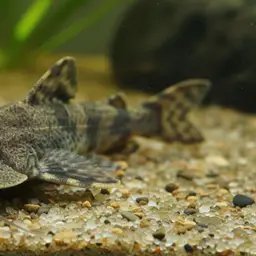
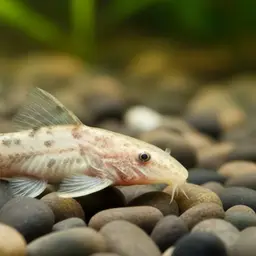
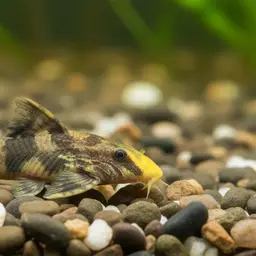
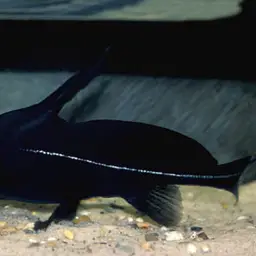
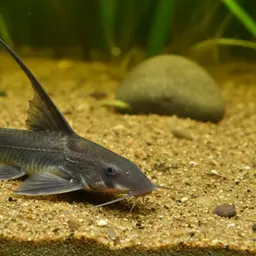
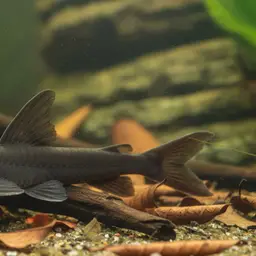
Good tank mates
Species that tend to coexist peacefully with Glass Catfish
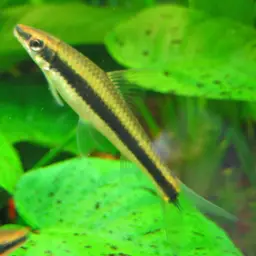
From the same region
Share the same natural habitat. Great for a biotope-themed tank
Frequently asked questions
- How big does the Glass Catfish get?
- The Glass Catfish reaches about 3.5–5" as an adult.
- What size tank does the Glass Catfish need?
- A minimum of 43 gallons is recommended for the Glass Catfish, with more room needed for a proper group.
- What water parameters does the Glass Catfish need?
- The Glass Catfish does best with a temperature of 68–82°F, a pH of 6–7.5, hardness around 2–15 dGH.
- Is the Glass Catfish aggressive?
- The Glass Catfish is generally peaceful and suits a community tank with similarly calm tankmates.
- What does the Glass Catfish eat?
- The Glass Catfish is an omnivore. It does well on a varied diet of quality flake or pellet plus occasional frozen or live foods.
- How long does the Glass Catfish live?
- With good care, the Glass Catfish typically lives 3-5 years.