Large Ivory Coral
Oculina varicosa
Also known as: fused ivory tree coral
A shapeshifting ivory coral that adapts its entire lifestyle to available light.

About
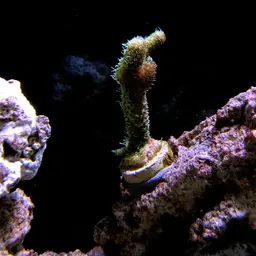
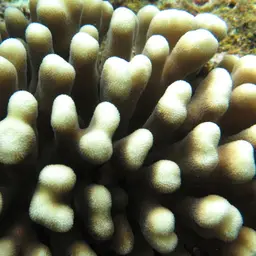
Large ivory coral (Oculina varicosa) is one of the more ecologically unusual hard corals you'll encounter, and its most remarkable trait is right at its core: depending on how much light it receives, it can live either with or without zooxanthellae. In well-lit, shallow protected environments starting at around 5 metres, it hosts the symbiotic algae and forms compact, branching clumps with fused, tapering fingers typically under half a metre across. In deeper or darker conditions, the same species abandons those algae entirely and can form extensive reef-like banks built purely through filter feeding. In the aquarium, you're working with the zooxanthellate form, which suits low-light reef setups and moderate flow. Corallites are small and raised, running 2 to 3 millimetres across, with septa arranged in three cycles giving the surface a neat, detailed texture. Colouration runs from warm tan and lavender through to darker brown. This flexibility makes it genuinely interesting to keep, though understanding which form you have and matching the right conditions accordingly is part of what puts it in intermediate territory rather than beginner. Given appropriate placement and stable water quality, it's a rewarding and somewhat underappreciated addition to a mixed reef.
Similar species
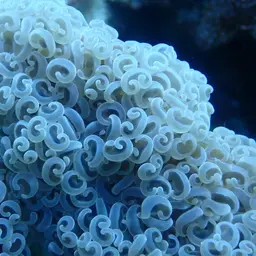
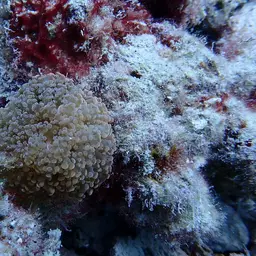
Other coral you might consider
Good tank mates
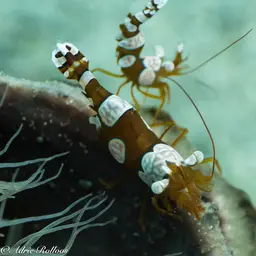
Species that tend to coexist peacefully with Large Ivory Coral
From the same region
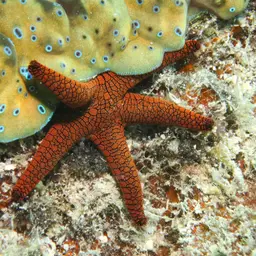
Share the same natural habitat. Great for a biotope-themed tank
Frequently asked questions
- What does the Large Ivory Coral eat?
- The Large Ivory Coral is a filter feeder. It eats tiny particles suspended in the water and usually needs target feeding in a home tank.
- Is the Large Ivory Coral reef safe?
- The Large Ivory Coral is generally considered reef safe.