Bumblebee Catfish
Pseudopimelodus bufonius
A boldly patterned South American catfish that's surprisingly easy to keep.

About
The bumblebee catfish (Pseudopimelodus bufonius) is a chunky, attractively patterned catfish from the river systems of northeastern South America, ranging from Lake Maracaibo across to eastern Brazil. In the wild it inhabits the kind of rocky, current-swept rivers where plenty of hiding spots break up the flow, and that background shapes how it behaves in the aquarium too. Give it caves, driftwood, or overhangs and it will settle in quickly and show itself more often than you might expect from a nocturnal bottom dweller. The bold dark-and-pale banding across its body is what earns it the bumblebee name, and the pattern holds up well even as the fish grows toward its adult size of nearly ten inches. Despite that eventual bulk it falls into the beginner-friendly category, being tolerant and not particularly fussy once established. It is best kept with tankmates that are too large to be swallowed, since like most pimelodids it has a mouth that can surprise you, but it is not aggressive toward fish it cannot eat. A meaty diet, sinking pellets, frozen bloodworm, prawn, keeps it in good condition. Overall it is a solid, characterful catfish for anyone wanting something a bit different on the bottom of a medium to large community setup.
Similar species
Other fish you might consider
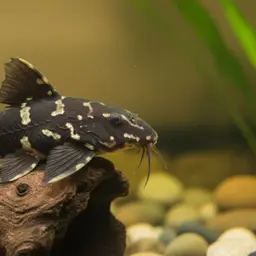
Chocolate Talking Catfish
FishAcanthodoras cataphractus
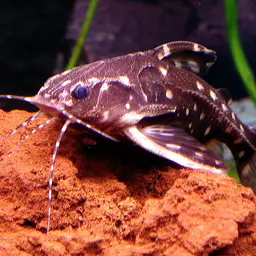
Spotted Raphael Catfish
FishAgamyxis pectinifrons
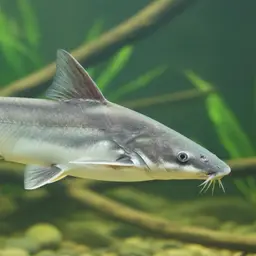
Manduba, Slopehead Catfish
FishAgeneiosus inermis
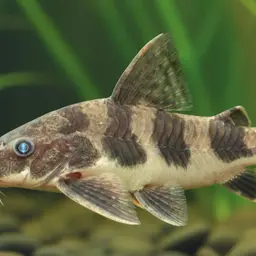
Blue-eyed Catfish
FishAmblydoras nauticus
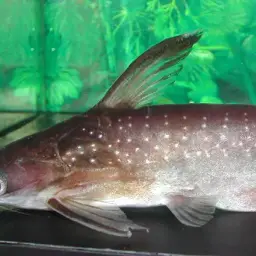
Zamora Woodcat
FishAuchenipterichthys coracoideus
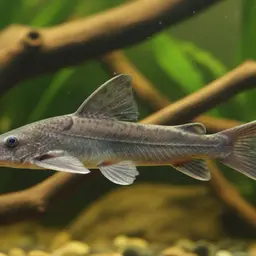
Driftwood Catfish
FishAuchenipterichthys longimanus
Good tank mates
Species that tend to coexist peacefully with Bumblebee Catfish
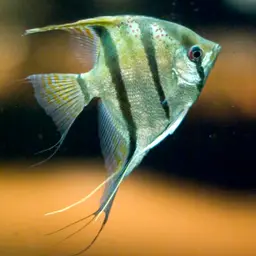
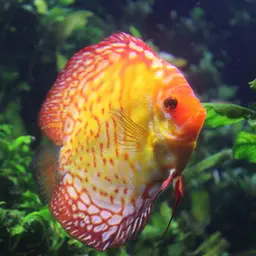
From the same region
Share the same natural habitat. Great for a biotope-themed tank
Frequently asked questions
- How big does the Bumblebee Catfish get?
- The Bumblebee Catfish reaches about 6–9.5" as an adult.
- What water parameters does the Bumblebee Catfish need?
- The Bumblebee Catfish does best with a temperature of 72–82°F, a pH of 6–7.5, hardness around 5–15 dGH.
- Is the Bumblebee Catfish aggressive?
- The Bumblebee Catfish is semi-aggressive. It can work in a community with careful tankmate choices and enough space.
- What does the Bumblebee Catfish eat?
- The Bumblebee Catfish is a carnivore. It needs a meaty, protein-rich diet of frozen or live foods.