Utaka
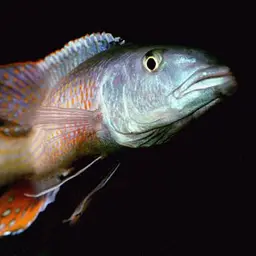
Copadichromis borleyi
A peaceful Malawi cichlid that rewards patient keepers with vivid color morphs and fascinating breeding behavior.

About
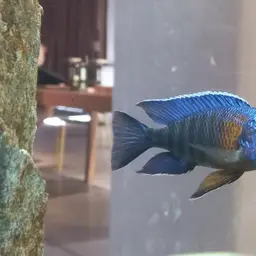
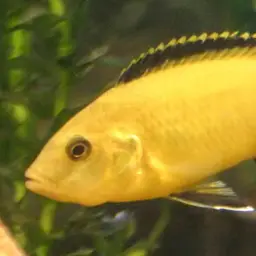
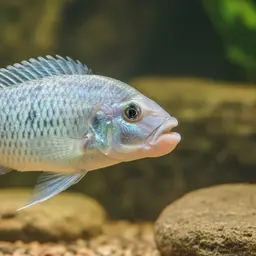
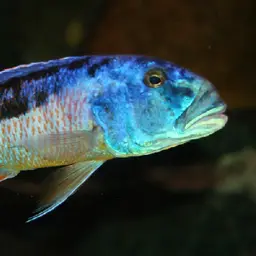
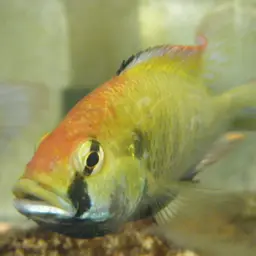
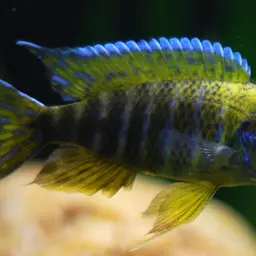
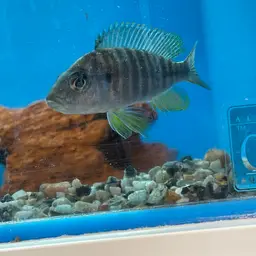
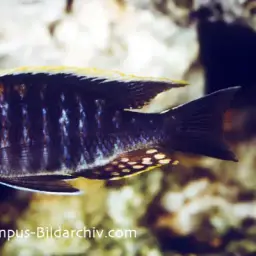
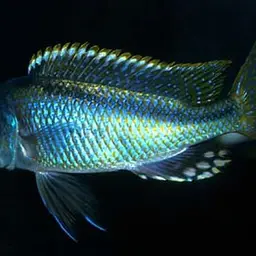
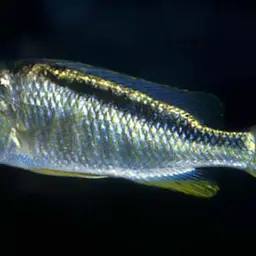
Found in Lake Malawi and belonging to a group of cichlids locally known as Utaka, Copadichromis borleyi is one of the more accessible members of this genus for the average cichlid keeper. In the wild it gravitates toward rocky terrain, often forming large schools around boulder fields and shallow rocky outcrops. Like its relatives, it is built for open-water feeding. Its highly protrusible upper jaw creates a split-second vacuum that sucks in planktonic prey with remarkable efficiency. Several color morphs exist across different collection localities, loosely grouped into yellow-finned and red-finned forms, and fish are often sold with a locality tag such as "Kadango" attached. It is a shoaling species, and a harem-style group works best in the aquarium, with one male kept alongside three or more females to spread any breeding aggression. Males can be persistent during courtship, so giving females room to retreat matters. Tankmates should be chosen carefully. Mbuna are too rough, similarly colored cichlids can trigger unnecessary aggression, and other Copadichromis species risk hybridization. Compatible Aulonocara and peaceful Haplochromine cichlids like Cyrtocara moorii make good companions. It is a maternal mouthbrooder that breeds with some regularity in home aquariums, making it a rewarding project for intermediate keepers ready to think about Malawi cichlid breeding.
Similar species
Other fish you might consider
Good tank mates
Species that tend to coexist peacefully with Utaka
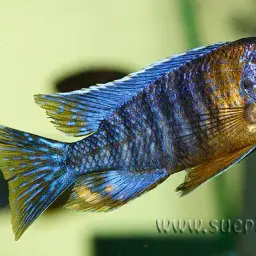
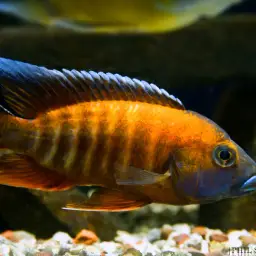
From the same region
Share the same natural habitat. Great for a biotope-themed tank
Frequently asked questions
- How big does the Utaka get?
- The Utaka reaches about 3.5–5.5" as an adult.
- What size tank does the Utaka need?
- A minimum of 20 gallons is recommended for the Utaka.
- What water parameters does the Utaka need?
- The Utaka does best with a temperature of 72–82°F, a pH of 7.5–8.5, hardness around 8–20 dGH.
- Is the Utaka aggressive?
- The Utaka is semi-aggressive. It can work in a community with careful tankmate choices and enough space.
- What does the Utaka eat?
- The Utaka is an omnivore. It does well on a varied diet of quality flake or pellet plus occasional frozen or live foods.
- How long does the Utaka live?
- With good care, the Utaka typically lives 5-8 years.