Aquariumpro
πŸ”

Clownfish

The iconic orange-and-white reef fish, famous for their symbiotic bond with anemones. Hardy, full of personality, and the go-to starter fish for many new reef keepers.

19 species
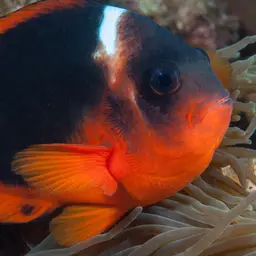
Australian Anemonefish

Australian Anemonefish

Fish

Amphiprion rubrocinctus

Australia's own anemonefish, rarely seen outside its home waters.
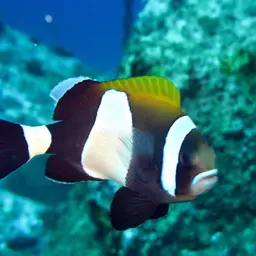
Blue-lip Anemonefish

Blue-lip Anemonefish

Fish

Amphiprion latezonatus

A rare Australian clownfish with bold white bands and a surprisingly deep blue lip.
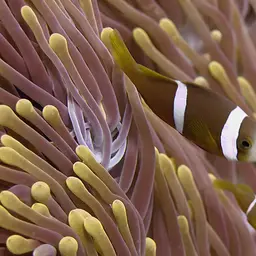
Chagos Anemonefish

Chagos Anemonefish

Fish

Amphiprion chagosensis

A rare Indian Ocean clownfish from one of the world's most remote archipelagos.
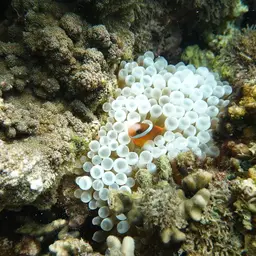
Chocolate clown

Chocolate clown

Fish

Amphiprion melanopus

Bold, rich coloring and a fiery personality packed into a reef-ready clownfish.
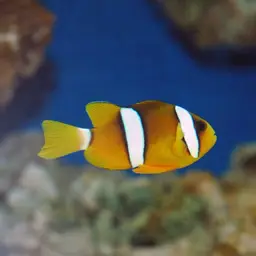
Clark's anemonefish

Clark's anemonefish

Fish

Amphiprion clarkii

The boldest clownfish in the reef, known to chase off divers.
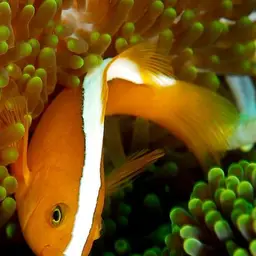
Eastern Skunk Anemonefish

Eastern Skunk Anemonefish

Fish

Amphiprion sandaracinos

A solid stripe from nose to dorsal fin sets this all-orange clownfish apart.
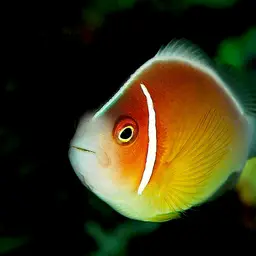
False Skunk-striped Anemonefish

False Skunk-striped Anemonefish

Fish

Amphiprion perideraion

A soft-pink, gentle clownfish that communicates by popping its jaws.
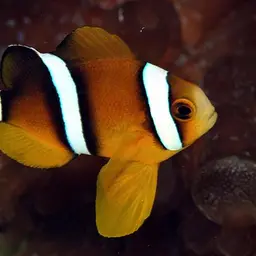
Maroon Clownfish

Maroon Clownfish

Fish

Amphiprion tricinctus

Three bold white bars on deep orange. The Marshall Islands' own anemonefish.
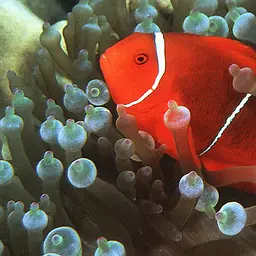
Maroon Clownfish

Maroon Clownfish

Fish

Premnas biaculeatus

The boldest clownfish in the hobby, and it knows it.
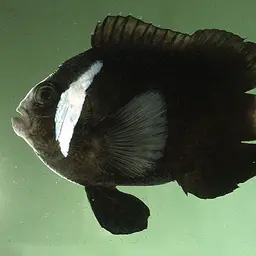
Mcculloch's Anemonefish

Mcculloch's Anemonefish

Fish

Amphiprion mccullochi

A rare island endemic with a bold personality that punches well above its size.
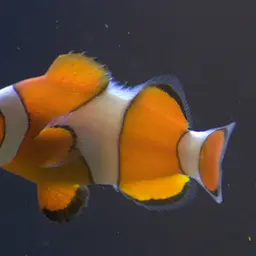
Ocellaris Clownfish

Ocellaris Clownfish

Fish

Amphiprion ocellaris

The iconic reef fish that lives fearlessly among stinging anemone tentacles.
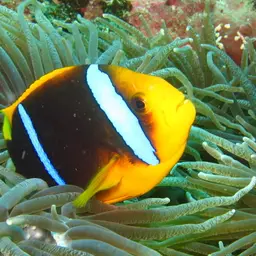
Orangefin Anemonefish

Orangefin Anemonefish

Fish

Amphiprion chrysopterus

A large, bold anemonefish from the wide Pacific with serious territorial attitude.
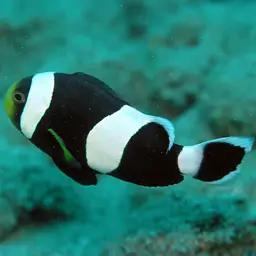
Panda Clownfish

Panda Clownfish

Fish

Amphiprion polymnus

A boldly patterned clownfish with a preference for sandy, silty homes.
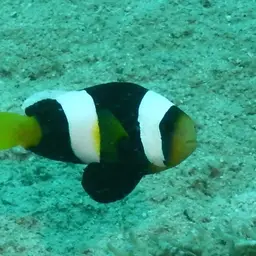
Sebae Clownfish

Sebae Clownfish

Fish

Amphiprion sebae

A bold, territorial clownfish that pairs best with one specific anemone host.
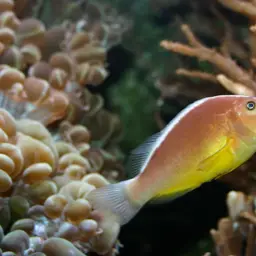
Skunk clownfish

Skunk clownfish

Fish

Amphiprion akallopisos

The pale skunk stripe makes this anemonefish one of the most recognizable in the ocean.
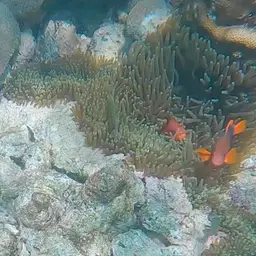
Tomato Clownfish

Tomato Clownfish

Fish

Amphiprion ephippium

A bold, deepening red clownfish that loses its white stripes as it matures.
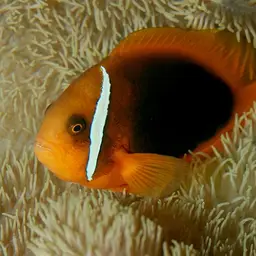
Tomato Clownfish

Tomato Clownfish

Fish

Amphiprion frenatus

A bold, flame-red clownfish that takes no nonsense from tankmates.
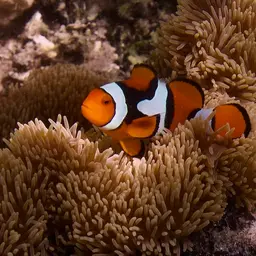
True Percula Clownfish

True Percula Clownfish

Fish

Amphiprion percula

The fish that launched a thousand reef tanks, with personality to match.
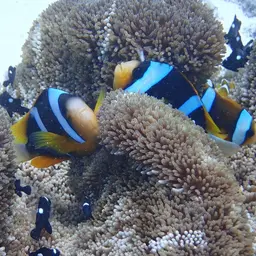
Twobar Anemonefish

Twobar Anemonefish

Fish

Amphiprion allardi

A bold, less-common clownfish from the Indian Ocean with classic two-bar markings.

Popular strains & varieties

Named color morphs and bred strains across clownfish species.

Gold Stripe Maroonstrain of Maroon ClownfishThe Gold Stripe Maroon is defined by its three broad, gold-to-yellow stripes set against a deep burgundy-red body β€” a combination that looks almost metallic under aquarium lighting. Juveniles typically show white stripes that gradually transition to gold as the fish matures, usually becoming fully golden around 2–3 years old. This is the most widely kept Maroon variant. When selecting, look for even stripe width and a rich, dark body color; faded or blotchy stripes can indicate stress or poor genetics. Like all Maroons, these fish are notably aggressive β€” plan tankmate selection carefully and give them a large anemone host if possible.Picassostrain of Ocellaris ClownfishThe Picasso is defined by its wildly irregular white banding β€” instead of the three clean stripes of a normal Ocellaris, the white patches are smeared, lobed, and connected in unpredictable ways that genuinely look like brushwork. No two fish are identical. Grading matters a lot here: 'High Grade' Picassos show dramatic, extensive white coverage, while lower grades can look almost normal with just a slightly wavy stripe. When buying, look for bold pattern interruptions on at least two bands. A rock-solid captive-bred strain, completely hardy and reef-safe. One of the foundational designer clownfish morphs.Platinum Perculastrain of True Percula ClownfishSolid, near-white fish with little to no orange pigmentation and reduced or absent black barring β€” at its best, a Platinum looks like a ghost percula with just a faint cream-to-white body. The degree of white coverage varies; top-grade specimens show complete white-out from head to tail with minimal patterning. Select fish where the white is uniform and clean, not patchy or yellowed. Captive-bred stock from reputable breeders is essential since the trait isn't stable enough to guarantee from wild-caught lines. Pairs well visually with darker anemones and makes a striking display fish. Care requirements are identical to standard percula.Onyx Perculastrain of True Percula ClownfishThe Onyx stands out for dramatically expanded black pigmentation that floods the body between the white bars, often leaving only narrow orange accents at the face and fin edges. The contrast between the inky black and crisp white stripes is striking and unmistakable. Expression varies β€” some fish show just heavy black edging on the stripes, while true show-grade Onyxes are predominantly black with orange restricted to small patches. Coloration tends to intensify as fish mature, so juveniles can look underwhelming at first. Pair selection matters: breeding two strong Onyx individuals produces more consistent offspring. Standard percula care applies.Snowflakestrain of Ocellaris ClownfishSnowflakes carry heavily expanded white bands that blob outward into the orange body, creating irregular snowflake-like splotches of white across the flanks. The pattern variation between individuals is massive β€” some show mostly white bodies with orange islands, others have a more balanced split. Unlike Picasso, the Snowflake mutation tends to push white coverage more uniformly across all three band positions. Grading is just as important here; higher-grade fish are worth the premium for display tanks. Completely compatible with anemones and standard reef setups. A staple of the captive-bred designer trade.White Stripe Maroonstrain of Maroon ClownfishWhite Stripe Maroons carry the classic three crisp, bright-white stripes on that signature deep maroon body β€” essentially the 'standard' patterning most people picture when they think of this species. The stripes remain white throughout the fish's life, unlike the Sumatran Gold Stripe form. Body color ranges from a brownish-red in juveniles to a rich, dark burgundy in large adults, particularly in females. These are widely captive-bred and generally considered slightly hardier than some designer variants. Avoid specimens with thin, broken, or yellowing stripes, as that can hint at hybridization or subpar husbandry history.Lightning Maroonstrain of Maroon ClownfishThe Lightning Maroon is immediately unmistakable: its white stripes fragment and branch into wild, irregular lightning bolt patterns across the entire body, sometimes extending into isolated spots and swirls that make every individual unique. This is arguably the most visually spectacular clownfish strain in the hobby. The Lightning pattern is caused by a recessive genetic mutation, and captive breeding programs have established consistent production of Lightning offspring. When buying, understand that pattern intensity and complexity vary β€” some fish show finer, denser branching while others are simpler. Pair them carefully; Maroons are still highly aggressive regardless of how stunning they look.Picasso Perculastrain of True Percula ClownfishNamed for the cubist painter, Picasso Perculas have wildly misshapen, asymmetrical white bars β€” stripes that blob out, fork, merge, or break into isolated white patches in ways that look almost hand-painted. No two fish are identical, which is half the appeal. The base orange color is normal; it's purely the white bar patterning that's disrupted. Grade matters a lot here: a premium Picasso has bold, dramatic distortions across all three bars, while a low-grade fish might have just a slightly wobbly middle stripe. Buy in person or request clear photos β€” pictures are essential for evaluating this variety.Platinumstrain of Ocellaris ClownfishPlatinum Ocellaris are almost entirely white with minimal to no orange pigmentation remaining, giving them an ethereal, ghost-like appearance. The best specimens are a clean, creamy white from nose to tail with only faint traces of orange, if any. Black markings in the fins remain, providing contrast against the white body. Platinums result from maximally expressing the white gene, essentially the 'full coverage' end of the Snowflake/Wyoming White spectrum. They're visually striking in reef tanks against colorful corals. Captive-bred and hardy β€” just make sure you're buying true Platinums and not pale Snowflakes marketed up.Gold Nugget Maroonstrain of Maroon ClownfishGold Nugget Maroons β€” also sold as Gold Flake Maroons β€” display the Lightning Maroon's fragmented, branching stripe pattern but expressed in gold rather than white, creating a dramatic mosaic of gold splotches and irregular markings over a deep maroon body. The gold coloration develops with age, so juveniles may show less impressive patterning than adults; buy with that trajectory in mind. Because this variant combines two complex traits (Lightning pattern + Gold stripe genetics), it remains relatively rare and commands premium prices. Captive-bred specimens are strongly preferred β€” wild-caught examples with this pattern combination are essentially nonexistent as a reliable source.Lightning Perculastrain of True Percula ClownfishOne of the most dramatic designer clownfish in the hobby: the Lightning Percula has a single, jagged, lightning-bolt-like white stripe β€” or a chaotic explosion of white β€” dominating one or both sides of the body in a pattern that looks nothing like a normal three-bar percula. The irregular white marking against vivid orange is visually arresting. These were originally sourced from wild-caught specimens from Papua New Guinea exhibiting extreme pattern anomalies, then line-bred to improve frequency and expression. Expect significant variation even within a clutch. These command premium prices; verify lineage from a known breeder to avoid misrepresented Picassos being sold as Lightnings.Wyoming Whitestrain of Ocellaris ClownfishWyoming Whites are a specific, genetically distinct all-white strain β€” not just a high-grade Snowflake. They show an almost completely white body with clear-to-translucent fins and very reduced black edging, giving them a softer, icier look than Platinums. The eyes are typically dark, which makes them pop against the pale body. This strain breeds true, which is an important distinction from simply color-grading Snowflakes. They're peaceful, captive-bred, and reef-safe. If you're comparing Wyoming White to Platinum side by side, Wyoming Whites often look cooler and cleaner in tone, with less creamy warmth.Fancy Perculastrain of True Percula ClownfishA collective grade name applied to A. percula showing multiple simultaneous pattern aberrations β€” partial Picasso-style bar distortion combined with some Onyx-like black expansion, producing fish with both broken white markings and heavier-than-normal black coverage. The look is busier and more complex than a single-trait variant. Consistency across batches can vary because 'Fancy' describes a phenotype tier rather than a tightly fixed genetic cross. Buy from reputable captive breeders who can show photos of the actual fish rather than relying on a category name alone.Fancy Whitestrain of Ocellaris ClownfishFancy Whites are essentially Wyoming Whites crossed back into other designer lines to introduce variable patterning while retaining extreme white coverage. They often show irregular patches of faint orange or unusual fin coloration alongside the predominantly white body. No two look quite the same. Think of them as white Ocellaris with a little artistic unpredictability thrown back in. They're not as 'clean' as Wyoming Whites or Platinums but offer more individual uniqueness. A solid captive-bred fish, fully reef-compatible. Great choice if you want a mostly white clownfish with some personality in the pattern.Fancy White Perculastrain of True Percula ClownfishFancy White Perculas combine the Picasso-style pattern disruption with significant white expansion, so the fish appear predominantly white with scattered orange patches rather than the reverse. The pattern is irregular and unique to each individual, but the overall impression is of a very light, almost washed-out fish covered in abstract white-on-orange or orange-on-white markings. The best specimens have vivid orange remnants that pop against the heavy white. This is essentially a high-white expression of the misbar/Picasso trait β€” lines are selectively bred to push white coverage as high as possible while retaining some color. Care is standard percula.Black Icestrain of Ocellaris ClownfishBlack Ice is what you get when you cross a Snowflake with a Midnight (or Black Ocellaris): the bold, irregular white patterning of a Snowflake mapped onto a fish with deep black body coloration instead of orange. The contrast is genuinely stunning β€” stark white splotches over a jet-black body with minimal orange remaining. Grading still applies; better specimens maximize both the black body tone and the white pattern complexity. These are visually one of the most dramatic designer Ocellaris available. Fully captive-bred, reef-safe, and hardy. They tend to command higher prices, but the visual payoff justifies it for most hobbyists.