Korean Bitterling
Acheilognathus signifer
A Korean bitterling with one of the most bizarre spawning strategies in freshwater fish

About
Found only in Korea, this obscure small cyprinid, Acheilognathus signifer, belongs to the bitterlings. A group of freshwater fish famous for a reproductive strategy unlike almost anything else in the hobby. Females develop a tube-like ovipositor during breeding season and deposit eggs directly into the gill chambers of living freshwater mussels, while males fertilize them by releasing milt near the mussel's intake siphon. The developing fry shelter inside the mussel for anywhere from two to several weeks before swimming free. This species is known to use at least two different mussel species as hosts, giving it a degree of flexibility compared to more specialist relatives. As adults go, they are compact fish, topping out around two and a half to three inches, with a deep, compressed body typical of the group. The dorsal fin carries a rich brown coloration with a pale marginal band, the anal fin shows several crossbars, and the ventral fins are notably dark. A combination that sets this species apart from its closest relatives. Although not commonly traded commercially, captive populations are kept in South Korea. The dependence on healthy mussel populations does make this species vulnerable to habitat degradation in the wild, and any serious attempt at captive breeding would require access to suitable live mussels.
Similar species
Other fish you might consider
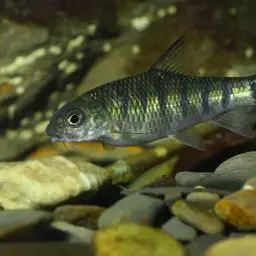
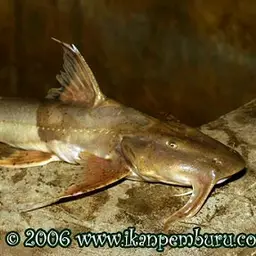
Good tank mates
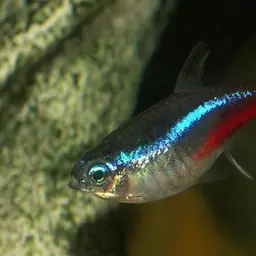
Species that tend to coexist peacefully with Korean Bitterling

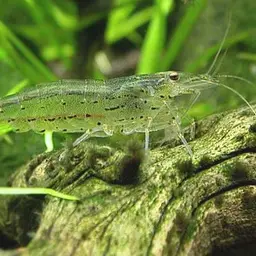
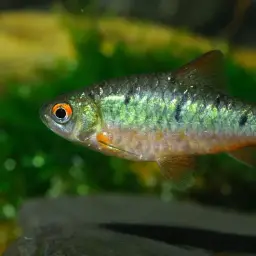


From the same region
Share the same natural habitat. Great for a biotope-themed tank
Frequently asked questions
- How big does the Korean Bitterling get?
- The Korean Bitterling reaches about 2.5–3" as an adult.
- Is the Korean Bitterling aggressive?
- The Korean Bitterling is generally peaceful and suits a community tank with similarly calm tankmates.
- What does the Korean Bitterling eat?
- The Korean Bitterling is an omnivore. It does well on a varied diet of quality flake or pellet plus occasional frozen or live foods.