Gold Barb
Barbodes semifasciolatus
Also known as: Golden Barb, Half-striped Barb
The golden form that fooled generations of fishkeepers into thinking it was the real thing.

About
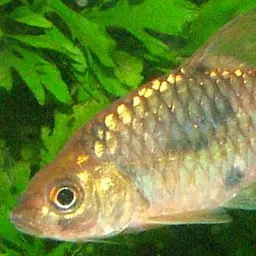
The gold barb (Barbodes semifasciolatus) has a curious split identity in the hobby. The wild form, native to the Red River basin in southwestern China including Hainan, is a subtly attractive fish with a greenish body marked by partial lateral striping. But what most hobbyists actually keep is a selectively bred golden-yellow strain developed in the 1960s, now produced in such vast commercial numbers that many keepers have no idea a natural green form even exists. An albino variant also surfaces occasionally. It's worth knowing that commercially farmed stock tends toward inbreeding, and reduced fin size or other minor deformities are not uncommon as a result. In the wild, this omnivore feeds on worms, crustaceans, insects, plant material, and detritus, and that broad diet translates well to aquarium life where it accepts most prepared and frozen foods without fuss. Temperament-wise, gold barbs are genuinely peaceful and slot easily into a well-chosen community. They do best kept in groups of eight or more, and a mixed-sex group rewards you with the added bonus of watching males display their richest coloration when competing for status or female attention. Other similarly sized, peaceful cyprinids and loaches make natural tankmates. Breeding follows the typical egg-scattering pattern of small cyprinids, with parents needing to be separated from the eggs promptly. A solid choice for newer keepers.
Similar species
Other fish you might consider
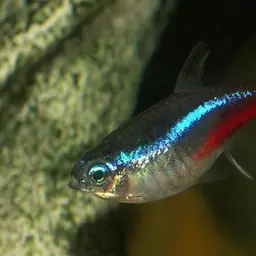
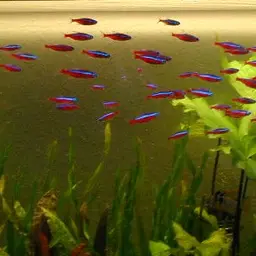
Good tank mates
Species that tend to coexist peacefully with Gold Barb
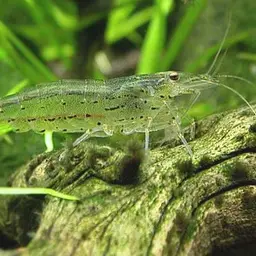
From the same region
Share the same natural habitat. Great for a biotope-themed tank

Frequently asked questions
- How big does the Gold Barb get?
- The Gold Barb reaches about 2–3" as an adult.
- What size tank does the Gold Barb need?
- A minimum of 21 gallons is recommended for the Gold Barb, with more room needed for a proper group.
- What water parameters does the Gold Barb need?
- The Gold Barb does best with a temperature of 68–82°F, a pH of 6–8, hardness around 2–20 dGH.
- Is the Gold Barb aggressive?
- The Gold Barb is generally peaceful and suits a community tank with similarly calm tankmates.
- What does the Gold Barb eat?
- The Gold Barb is an omnivore. It does well on a varied diet of quality flake or pellet plus occasional frozen or live foods.