Greater Scissortail
Rasbora caudimaculata
Also known as: Greater Scissortail Rasbora
A large, long-lived rasbora with a restless tail and real presence in a big tank.

About
The greater scissortail (Rasbora caudimaculata) is one of the more substantial members of its genus, growing to a respectable size that demands both space and appropriately bold tankmates. The common name. Shared with its smaller relative R. trilineata. Comes from a distinctive habit of twitching the forked tail while the fish hovers at rest, almost like a pair of scissors opening and closing. Distinguishing the two species is straightforward if you know what to look for: the greater scissortail carries orange-red pigment in the caudal fin along with black-tipped lobes and a faint dark reticulation along the scale edges. In the wild it occupies shaded forest streams across Malaysia, Indonesia, and the lower Mekong basin, typically near the surface and often over sandy bottoms. It is a fast, active schooling fish, and keeping a group of at least six brings out noticeably better color and calmer behavior across the whole group. Its peaceful temperament suits a spacious community, though its size and energy level mean shy or slow-moving companions can find it stressful to live with. Sturdier cyprinids, loaches, and larger characins tend to make the best neighbors. With a lifespan that can reach a decade, this is a fish worth investing proper thought into housing well.
Similar species
Other fish you might consider
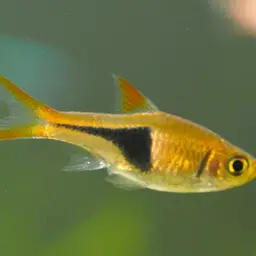
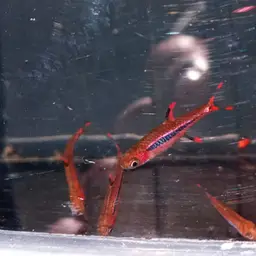
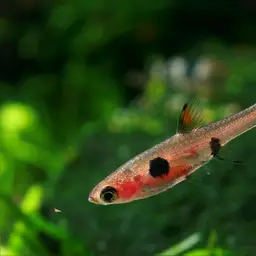
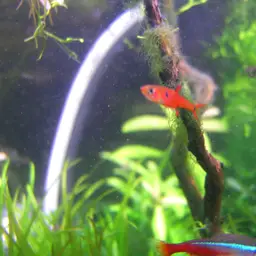
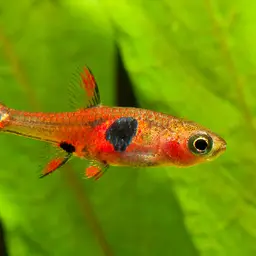
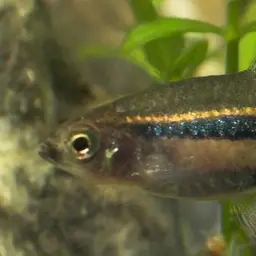
Good tank mates
Species that tend to coexist peacefully with Greater Scissortail
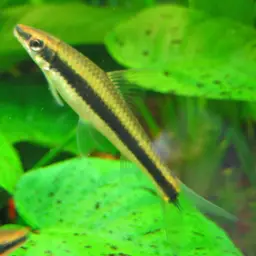
From the same region
Share the same natural habitat. Great for a biotope-themed tank
Frequently asked questions
- How big does the Greater Scissortail get?
- The Greater Scissortail reaches about 4–6.5" as an adult.
- What size tank does the Greater Scissortail need?
- A minimum of 84 gallons is recommended for the Greater Scissortail, with more room needed for a proper group.
- What water parameters does the Greater Scissortail need?
- The Greater Scissortail does best with a temperature of 68–82°F, a pH of 5–7.5, hardness around 2–12 dGH.
- Is the Greater Scissortail aggressive?
- The Greater Scissortail is generally peaceful and suits a community tank with similarly calm tankmates.
- What does the Greater Scissortail eat?
- The Greater Scissortail is an omnivore. It does well on a varied diet of quality flake or pellet plus occasional frozen or live foods.
- How long does the Greater Scissortail live?
- With good care, the Greater Scissortail typically lives 8-10 years.