Orange dwarf toothcarp
Neoheterandria elegans
A tiny Colombian livebearer with a fascinating near-mammalian reproductive twist.

About
Found in the Rio Truando, a Colombian tributary of the Rio Atrato, Neoheterandria elegans is one of those rarities that turns up occasionally through specialist breeders and is seldom seen in mainstream retail. It is a genuinely small fish, adults barely reach an inch, and that alone makes it unsuitable for a mixed community tank, where it would simply be lost or bullied. A species-only setup planted heavily enough to break sightlines suits it well, partly because females can be surprisingly aggressive toward each other, and dense cover goes a long way toward keeping the peace. What really sets this species apart is its reproductive biology. Like a handful of other poeciliids, it uses superfoetation, carrying embryos at multiple stages of development simultaneously, and the developing young draw nourishment through organs that work much like a mammalian placenta rather than relying solely on egg yolk. The practical result is that instead of dropping a defined brood every month or so, a female produces a small trickle of fry every day or two over the course of a week. Those fry are tiny at birth and need infusoria before they can handle anything larger, but they grow surprisingly fast and can reproduce themselves within three months. An unusual fish for someone who wants something genuinely different in a small tank.
Similar species
Other fish you might consider
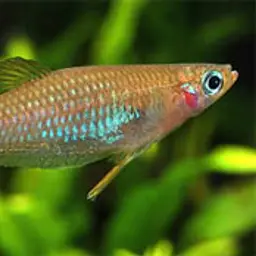
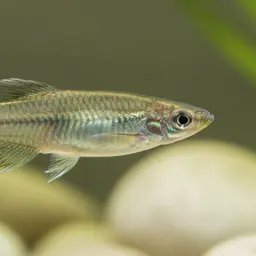
Good tank mates
Species that tend to coexist peacefully with Orange dwarf toothcarp
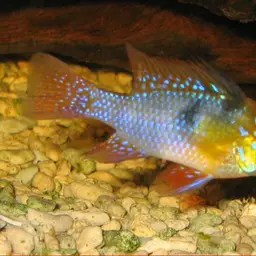
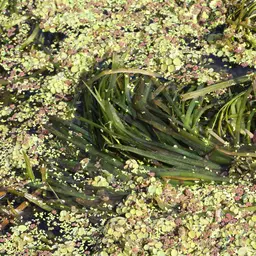
From the same region
Share the same natural habitat. Great for a biotope-themed tank
Frequently asked questions
- How big does the Orange dwarf toothcarp get?
- The Orange dwarf toothcarp reaches about 0.5–1" as an adult.
- What size tank does the Orange dwarf toothcarp need?
- A minimum of 5 gallons is recommended for the Orange dwarf toothcarp.
- What water parameters does the Orange dwarf toothcarp need?
- The Orange dwarf toothcarp does best with a temperature of 72–86°F, a pH of 6.5–8, hardness around 5–25 dGH.
- Is the Orange dwarf toothcarp aggressive?
- The Orange dwarf toothcarp is semi-aggressive. It can work in a community with careful tankmate choices and enough space.
- What does the Orange dwarf toothcarp eat?
- The Orange dwarf toothcarp is an omnivore. It does well on a varied diet of quality flake or pellet plus occasional frozen or live foods.