Shell-dweller
Neolamprologus similis
Tiny shell-dwelling cichlid with a ferocious personality well above its size.

About
A compact shell-dweller from Lake Tanganyika, Neolamprologus similis is found in the lake's southern reaches across both the Democratic Republic of Congo and Tanzanian sides, living in dense shell beds at depths ranging from about 10 to 45 metres. It closely resembles its more commonly seen cousin N. multifasciatus, but you can tell them apart by the extra barring on the head and neck region, and by the fact that the body stripes in similis appear light rather than dark. Don't let the small adult size fool you. This fish will defend its chosen shell and the inch or two of sand around it with genuine ferocity, readily nipping at tankmates or even the keeper's hand if it feels threatened. Keeping a colony works well as long as shells are plentiful and females outnumber males, which helps spread out aggression. Good tankmates include small rock-dwelling cichlids from the same lake or open-water species that occupy different parts of the aquarium. Breeding is straightforward enough for beginners willing to do a little homework. Females bury their shells until only the entrance is visible, lay eggs inside, and handle all parental duties solo once the male has done his part. The fry are free-swimming within a week and grow into bold little personalities.
Similar species
Other fish you might consider
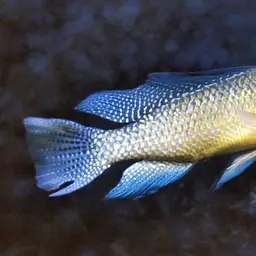
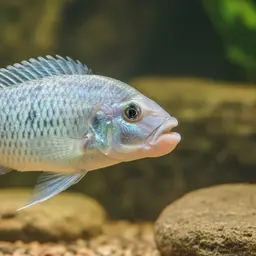
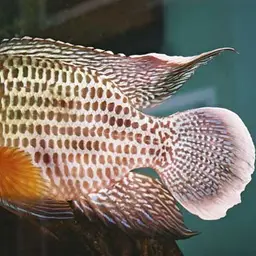
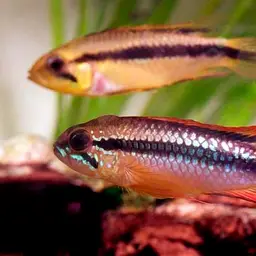
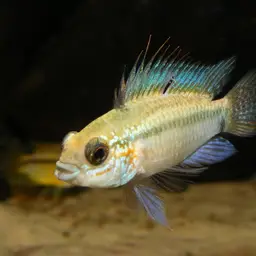
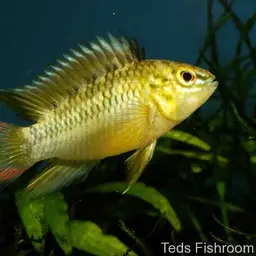
Good tank mates
Species that tend to coexist peacefully with Shell-dweller
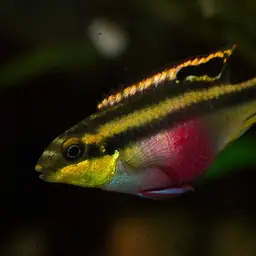
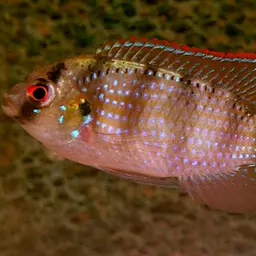
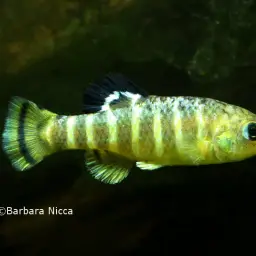
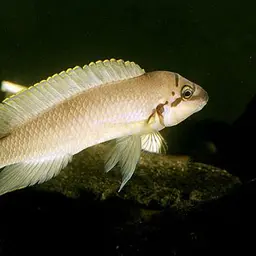
From the same region
Share the same natural habitat. Great for a biotope-themed tank
Frequently asked questions
- How big does the Shell-dweller get?
- The Shell-dweller reaches about 1–2" as an adult.
- What size tank does the Shell-dweller need?
- A minimum of 11 gallons is recommended for the Shell-dweller.
- What water parameters does the Shell-dweller need?
- The Shell-dweller does best with a temperature of 73–82°F, a pH of 7.4–9, hardness around 7–30 dGH.
- Is the Shell-dweller aggressive?
- The Shell-dweller is semi-aggressive. It can work in a community with careful tankmate choices and enough space.