Palm Lettuce Coral
Pectinia paeonia
A sculptural reef coral that thrives where others struggle with murky water.

About
Found on fringing reefs and tucked into crevices along reef slopes across the Western Central Pacific, Pectinia paeonia is a large polyp stony coral with a genuinely unusual growth form. Rather than forming the neat valleys you see in many other LPS corals, colonies build irregular clusters of thin, fluted plates that fold and curl upward into spires and short walls, giving the whole structure an almost crumpled, sculptural quality. Costae project outward from the surface, adding to the layered texture, while the septa are mostly smooth with only modest dentition. Coloration is understated. Muted browns, greys, and greens, sometimes uniform across the colony and sometimes mottled in a patchwork pattern. In the wild this species gravitates toward turbid conditions, which sets it apart from the many reef corals that demand crystal-clear water. That tolerance for lower light and reduced clarity carries over into the aquarium, where moderate lighting and moderate flow suit it well. It is considered reef safe and sits at an intermediate care level, so while it is not the right pick for a complete beginner, an aquarist with some LPS experience should find it manageable. Its sculptural form makes it an interesting textural contrast in a mixed reef display.
Similar species
Other coral you might consider
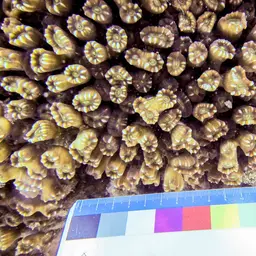
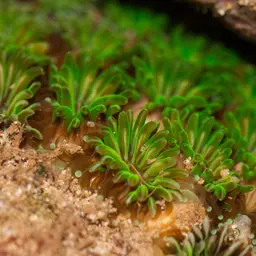
Good tank mates
Species that tend to coexist peacefully with Palm Lettuce Coral
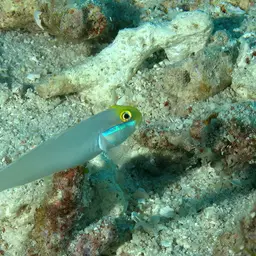
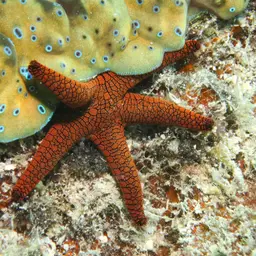
From the same region
Share the same natural habitat. Great for a biotope-themed tank
Frequently asked questions
- What water parameters does the Palm Lettuce Coral need?
- The Palm Lettuce Coral does best with a temperature of 72–82°F, a pH of 8–8.4.
- Is the Palm Lettuce Coral reef safe?
- The Palm Lettuce Coral is generally considered reef safe.