Wahrindi
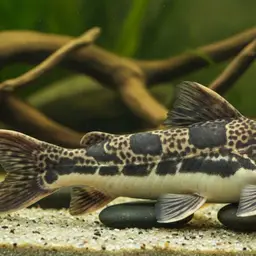
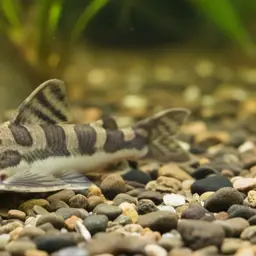
Synodontis gambiensis
A wide-ranging West African catfish that earns its space with character.

About
Found across an impressive sweep of West African river systems, this obscure mochokid catfish, Synodontis gambiensis, inhabits major drainages from the Senegal and Gambia rivers east through the Volta, Niger, and Chad basins. One of the broadest natural ranges of any catfish in the region. In the wild it is an opportunistic omnivore, picking through substrate for insect larvae (particularly midge larvae), aquatic nymphs, detritus, molluscs, and the occasional small fish. That flexible approach to feeding makes it relatively straightforward to cater for in captivity; most quality sinking foods, frozen invertebrates, and vegetable matter are accepted without fuss. It grows to a solid ten or eleven inches at adulthood, so it is not a fish for small setups. Give it proper space and some cave-like hiding spots where it can retreat during the day, since like most Synodontis it tends toward nocturnal activity. Tank companions should be robust enough to hold their own; smaller or more timid fish can find a fish this size unsettling. Wild breeding is tied to seasonal flooding, and captive reproduction is rarely achieved without specialist intervention. Overall this is an intermediate-level species. Not especially demanding, but one that rewards keepers who understand the needs of larger benthic catfish.
Similar species
Other fish you might consider
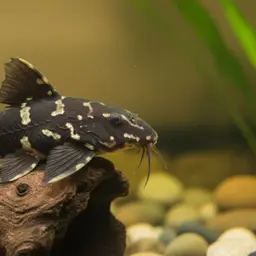
Chocolate Talking Catfish
FishAcanthodoras cataphractus
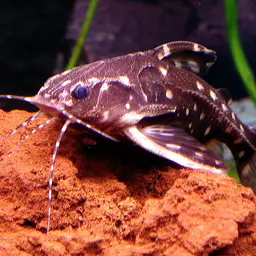
Spotted Raphael Catfish
FishAgamyxis pectinifrons
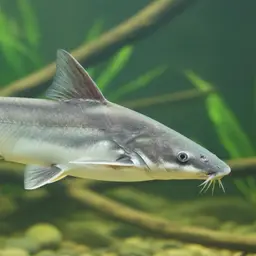
Manduba, Slopehead Catfish
FishAgeneiosus inermis
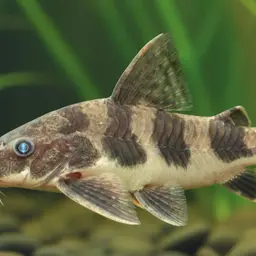
Blue-eyed Catfish
FishAmblydoras nauticus
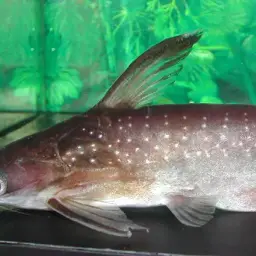
Zamora Woodcat
FishAuchenipterichthys coracoideus
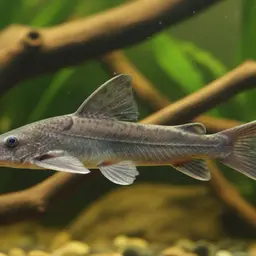
Driftwood Catfish
FishAuchenipterichthys longimanus
Good tank mates
Species that tend to coexist peacefully with Wahrindi
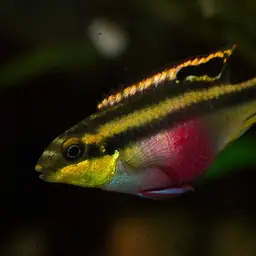
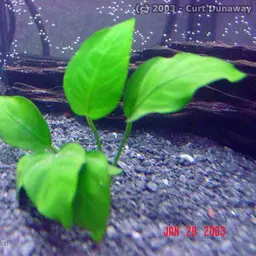
From the same region
Share the same natural habitat. Great for a biotope-themed tank
Frequently asked questions
- How big does the Wahrindi get?
- The Wahrindi reaches about 10–11" as an adult.
- What size tank does the Wahrindi need?
- A minimum of 55 gallons is recommended for the Wahrindi.
- What water parameters does the Wahrindi need?
- The Wahrindi does best with a temperature of 72–82°F, a pH of 6–8, hardness around 4–25 dGH.
- Is the Wahrindi aggressive?
- The Wahrindi is semi-aggressive. It can work in a community with careful tankmate choices and enough space.
- What does the Wahrindi eat?
- The Wahrindi is an omnivore. It does well on a varied diet of quality flake or pellet plus occasional frozen or live foods.
- How long does the Wahrindi live?
- With good care, the Wahrindi typically lives 5-10 years.