Squeaker
Synodontis multipunctata
The catfish that tricks cichlids into raising its young for it.

About
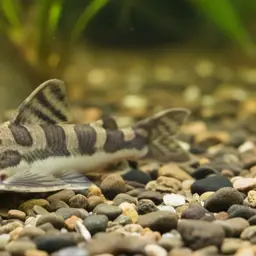
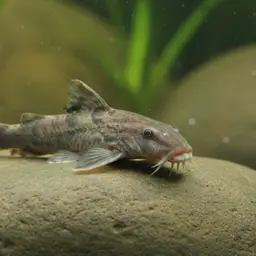
The squeaker (Synodontis multipunctata) is probably best known for one of the most devious reproductive tricks in freshwater fishkeeping: brood parasitism. Native to Lake Tanganyika, where it roams muddy lake bottoms down to considerable depths feeding on invertebrates and snails, this heavily spotted catfish has evolved a strategy of timing its own spawning to coincide with that of mouthbrooding cichlids. The catfish slips its eggs in among the cichlid's clutch, the eggs hatch faster than the host's, and the young catfish consume both the cichlid eggs and early fry while being unwittingly guarded by the duped parent. Many Tanganyikan cichlids appear to have developed a learned wariness of this species over time, which is why hobbyists breeding them in captivity often use Malawi or Victorian haplochromines as host fish instead. In the aquarium, squeakers are reasonably straightforward to keep. A solid choice for someone moving into Rift Lake setups. They do best in groups of four or more, since solitary individuals tend to hide constantly. While they can hold their own with robust cichlids, they will make short work of anything small enough to fit in their mouths. Many specimens available today are captive bred, which speaks to how regularly this fascinating species reproduces in home aquaria.
Similar species
Other fish you might consider
Good tank mates
Species that tend to coexist peacefully with Squeaker
From the same region
Share the same natural habitat. Great for a biotope-themed tank
Frequently asked questions
- How big does the Squeaker get?
- The Squeaker reaches about 5–9" as an adult.
- What size tank does the Squeaker need?
- A minimum of 29 gallons is recommended for the Squeaker.
- What water parameters does the Squeaker need?
- The Squeaker does best with a temperature of 68–82°F, a pH of 6.5–8.5, hardness around 10–35 dGH.
- Is the Squeaker aggressive?
- The Squeaker is semi-aggressive. It can work in a community with careful tankmate choices and enough space.
- What does the Squeaker eat?
- The Squeaker is an omnivore. It does well on a varied diet of quality flake or pellet plus occasional frozen or live foods.
- How long does the Squeaker live?
- With good care, the Squeaker typically lives 10-15 years.