Jumbie Teta
Ancistrus cf cirrhosus
Also known as: Bristlenose
The bristlenose catfish: a compact, algae-grazing workhorse with a face only a hobbyist could love.

About
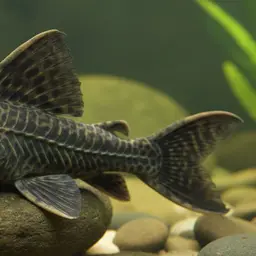
The Jumbie Teta (Ancistrus cf cirrhosus) is almost certainly the most widely kept pleco-type catfish in the freshwater hobby, and for good reason. This is the fish most people simply call a "bristlenose," recognizable by the fleshy tentacles sprouting from the snout. More pronounced and elaborate in males than females. Despite being sold and bred in huge numbers globally, its true wild origin remains genuinely unknown, and genetic evidence suggests it may even be a hybrid rather than a pure species. It was traded under the informal name Ancistrus sp. '3' for years and has been misidentified under a string of other scientific names. Several ornamental varieties have been developed over the decades, including albino, xanthic, piebald, and long-finned forms, the last of which sometimes appear in shops labeled as butterfly or veiltail catfish. In the aquarium it's a reliable algae grazer and a manageable size compared to most loricariids. It is territorial toward its own kind and other similarly-shaped bottom dwellers, so keep that in mind when stocking. Breeding happens readily in cave-like structures, with the male standing guard over the eggs and fry, and in a mature, well-run setup you may find juveniles appearing without any deliberate effort on your part. A genuinely forgiving choice for newer keepers.
Similar species
Other fish you might consider
Good tank mates
Species that tend to coexist peacefully with Jumbie Teta
From the same region
Share the same natural habitat. Great for a biotope-themed tank
Frequently asked questions
- How big does the Jumbie Teta get?
- The Jumbie Teta reaches about 4–5" as an adult.
- What size tank does the Jumbie Teta need?
- A minimum of 14 gallons is recommended for the Jumbie Teta.
- What water parameters does the Jumbie Teta need?
- The Jumbie Teta does best with a temperature of 70–79°F, a pH of 5.5–7.5, hardness around 1–15 dGH.
- Is the Jumbie Teta aggressive?
- The Jumbie Teta is aggressive and is best kept alone or with robust tankmates that can hold their own.
- What does the Jumbie Teta eat?
- The Jumbie Teta is a herbivore. It needs a plant-based diet such as algae, blanched vegetables, or spirulina-based foods.