Mexican tetra
Astyanax mexicanus
Also known as: Sardina Ciega
The cave fish that lost its eyes and gained extraordinary senses.

About
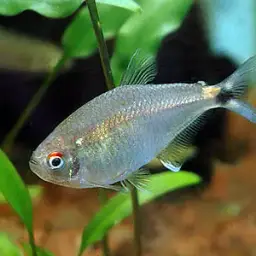
Sardina Ciega (Astyanax mexicanus) is one of the more remarkable fish you'll encounter in the freshwater hobby, and not just for its appearance. This species exists in two naturally occurring forms: a sighted, surface-dwelling variant and the far more familiar blind cave form, which has lost both its eyes and most of its pigmentation. The two forms likely diverged within the last 10,000 years, with the cave population trading away visually-oriented traits in favor of dramatically enhanced sensory systems. More taste receptors across the head, and a highly tuned lateral line capable of building a detailed spatial map of its surroundings. Farm-raised individuals have even begun developing a faint silvery sheen, possibly hinting at ongoing adaptation to life outside cave systems. In the wild, this species occupies rocky and sandy-bottomed pools, backwaters, and river systems across Mexico, feeding opportunistically on insects, crustaceans, and worms. In a home aquarium it's a genuinely forgiving choice for newer keepers. Peaceful in a community setting, though it does best with active tankmates rather than slow or timid species. It occasionally bumps into neighbors during feeding, but this reflects its tactile foraging style rather than any real aggression. Keep a group of at least five for the best results.
Similar species
Other fish you might consider
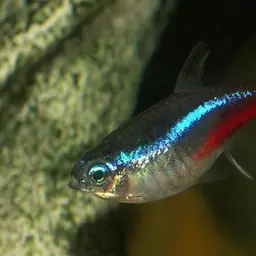


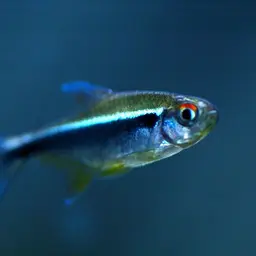
Good tank mates
Species that tend to coexist peacefully with Mexican tetra
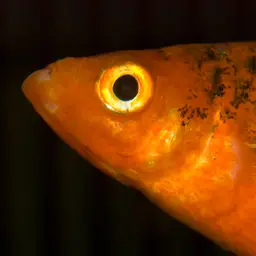
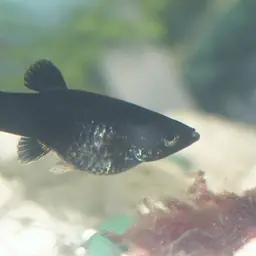

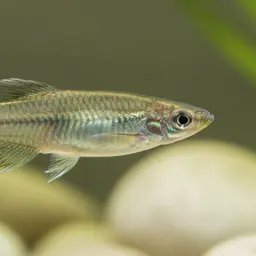
From the same region
Share the same natural habitat. Great for a biotope-themed tank
Frequently asked questions
- How big does the Mexican tetra get?
- The Mexican tetra reaches about 3–4.5" as an adult.
- What size tank does the Mexican tetra need?
- A minimum of 19 gallons is recommended for the Mexican tetra, with more room needed for a proper group.
- What water parameters does the Mexican tetra need?
- The Mexican tetra does best with a temperature of 68–82°F, a pH of 6.5–8, hardness around 5–25 dGH.
- Is the Mexican tetra aggressive?
- The Mexican tetra is generally peaceful and suits a community tank with similarly calm tankmates.
- What does the Mexican tetra eat?
- The Mexican tetra is an omnivore. It does well on a varied diet of quality flake or pellet plus occasional frozen or live foods.
- How long does the Mexican tetra live?
- With good care, the Mexican tetra typically lives 2-8 years.