Blue Banded Barb
Barbus fasciolatus
Also known as: Angola Barb
A rarely exported African barb with bold vertical bars and crepuscular habits.

About
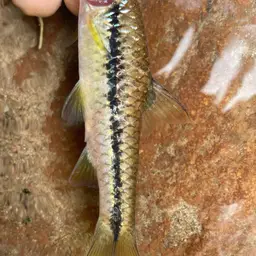
Found across a broad sweep of southern and central African river systems, the Okavango, Zambezi, Kafue, upper Kasai, and into the upper Congo basin, this small barb, Barbus fasciolatus, goes by the names Blue Banded Barb or Angola Barb in the trade. It is identifiable by its row of 10 to 15 dark vertical bars along the body, with one of the middle bars typically ovoid in shape and the last forming a distinct spot near the tail. It's a genuinely attractive fish when in top condition, though you'll rarely encounter it at your local shop due to irregular export availability from its home range. In the wild it gravitates toward well-oxygenated, vegetated habitats like floodplain channels and permanent lagoons, and it carries those preferences into the aquarium. It is most active around dawn and dusk, and bright conditions can make it shy and withdrawn. This is a shoaling species rather than a tight schooler, and males develop a clear pecking order among themselves. A group of eight or more is recommended, with plenty of cover and broken sightlines to give subordinate fish some breathing room. Peaceful tankmates of similar size work well. Dwarf cichlids, smaller African tetras, and modest-sized catfish are all reasonable choices. Not overly difficult to keep, but its need for softer, acidic water and thoughtful group housing puts it in intermediate territory.
Similar species
Other fish you might consider
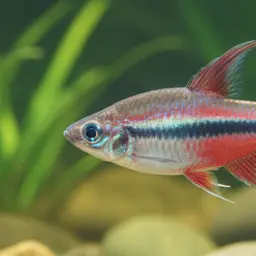
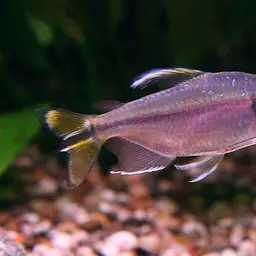
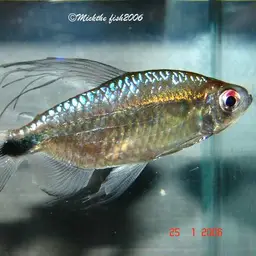
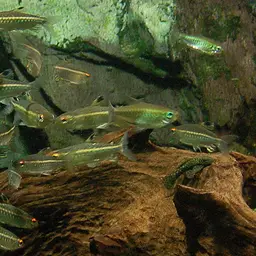
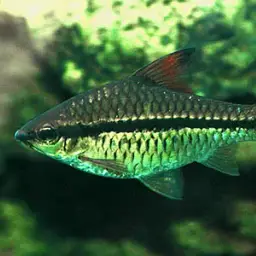
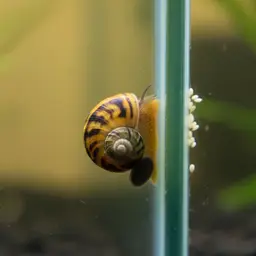
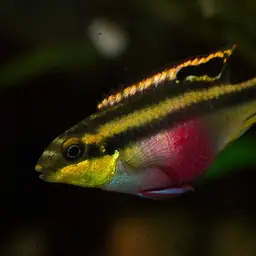
Good tank mates
Species that tend to coexist peacefully with Blue Banded Barb
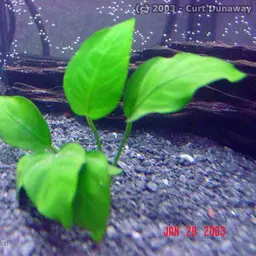
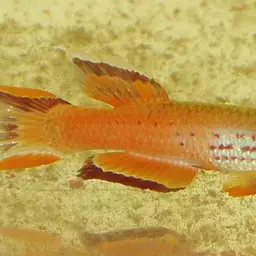
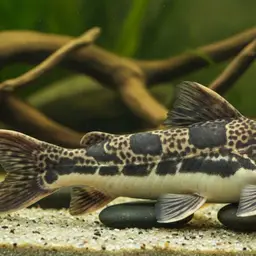
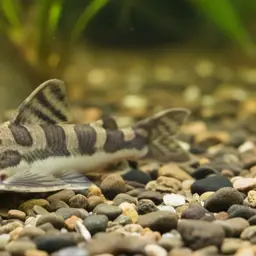
From the same region
Share the same natural habitat. Great for a biotope-themed tank
Frequently asked questions
- How big does the Blue Banded Barb get?
- The Blue Banded Barb reaches about 1.5–2.5" as an adult.
- What size tank does the Blue Banded Barb need?
- A minimum of 18 gallons is recommended for the Blue Banded Barb, with more room needed for a proper group.
- What water parameters does the Blue Banded Barb need?
- The Blue Banded Barb does best with a temperature of 68–79°F, a pH of 5–6.5, hardness around 1–12 dGH.
- Is the Blue Banded Barb aggressive?
- The Blue Banded Barb is generally peaceful and suits a community tank with similarly calm tankmates.
- What does the Blue Banded Barb eat?
- The Blue Banded Barb is an omnivore. It does well on a varied diet of quality flake or pellet plus occasional frozen or live foods.
- How long does the Blue Banded Barb live?
- With good care, the Blue Banded Barb typically lives 3-5 years.