Spotted Barbel
Hemibarbus maculatus
Also known as: Spotted steed
A bold, active coolwater fish with a row of dramatic flank spots.

About
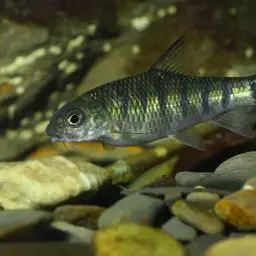
The spotted barbel (Hemibarbus maculatus) is a sizeable cyprinid from the rivers and streams of China, Korea, Japan, and the Amur River basin, where it favors moderately flowing water over sandy substrates. It's immediately recognizable by the row of 7 to 11 large, dark spots running along each flank, combined with a noticeably deep body and a distinctly arched back profile. A silhouette that sets it apart from close relatives in the genus. The head is relatively compact, the snout short, and the barbels are small, barely half the diameter of the eye. In the wild, diet shifts with the seasons, focusing on insects and mollusks through summer before switching to crustaceans in the colder months, which tells you something about the species' adaptability. Spawning happens in late spring and early summer, with eggs scattered among aquatic vegetation. In the aquarium, this is a cool-water species that needs good filtration and flow to mirror its riverine origins, and its adult size means a spacious tank is a must. It has been flagged as ecologically disruptive where introduced outside its native range, so responsible keeping is important. Overall it's a manageable choice for a beginner willing to accommodate its need for room and cooler temperatures.
Similar species
Other fish you might consider

Good tank mates
Species that tend to coexist peacefully with Spotted Barbel
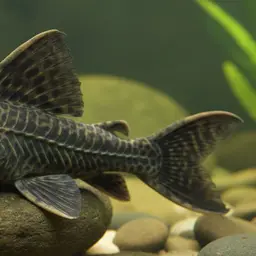
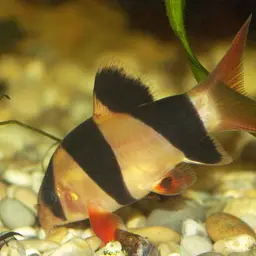

From the same region
Share the same natural habitat. Great for a biotope-themed tank
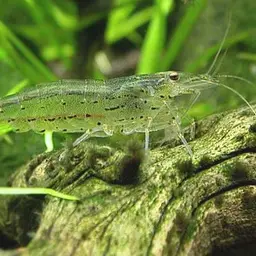
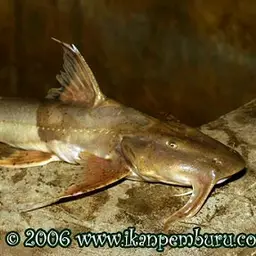
Frequently asked questions
- How big does the Spotted Barbel get?
- The Spotted Barbel reaches about 12–15.5" as an adult.
- What water parameters does the Spotted Barbel need?
- The Spotted Barbel does best with a temperature of 50–75°F.
- Is the Spotted Barbel aggressive?
- The Spotted Barbel is generally peaceful and suits a community tank with similarly calm tankmates.
- What does the Spotted Barbel eat?
- The Spotted Barbel is an omnivore. It does well on a varied diet of quality flake or pellet plus occasional frozen or live foods.