Foersch's Mouthbrooder
Betta foerschi
A shy Bornean mouthbrooder that rewards patient, dedicated keepers.

About
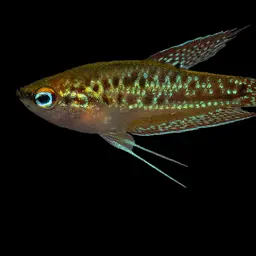
Found in the rainforest creeks of southern Borneo, Betta foerschi is a small, peaceful species that gives its name to a whole group of closely related bettas. All sharing iridescent blue or green unpaired fins, a thin white band along the dorsal fin tip, and paired reddish-yellow bars on the opercle. It stays compact at under three inches and carries itself with a quiet, almost cautious demeanor that sets it apart from the flashier bettas most people know. Like its relatives in the suborder Anabantoidei, it has a labyrinth organ that allows it to breathe air directly from the surface, which matters considerably when setting up its aquarium. This is not a fish for a typical community tank. It is best kept alone or with extremely peaceful, soft-water species, and even housing multiple pairs together can be unpredictable. Some keepers report only minor squabbling, while others have seen dominant fish persistently harass weaker individuals. Where this species really captures attention is in reproduction: it is a paternal mouthbrooder, with the male carrying the eggs for up to two weeks, and unusually for a mouthbrooding betta, he may continue eating throughout the brooding period. Fish sold under this name are sometimes actually the closely related B. mandor, so sourcing from reputable collectors who label locality populations accurately is well worth the effort.
Similar species
Other fish you might consider
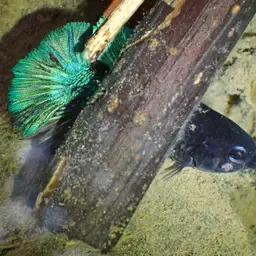
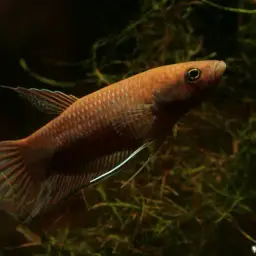
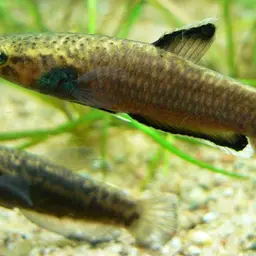
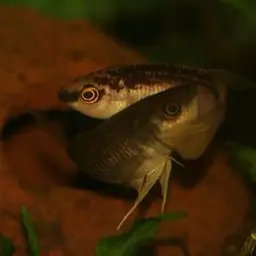
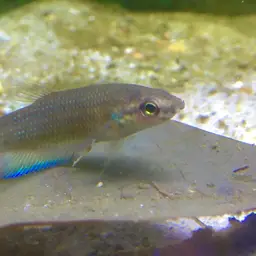
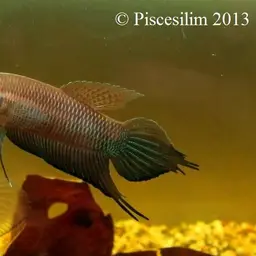
Good tank mates
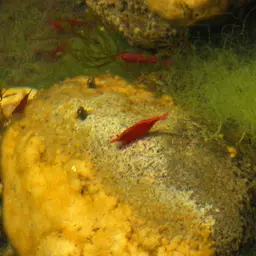
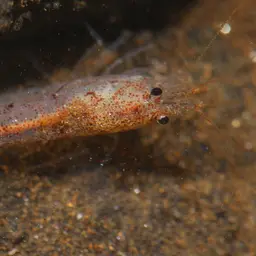
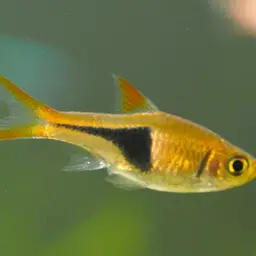
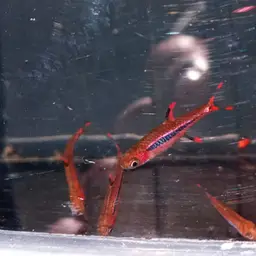
Species that tend to coexist peacefully with Foersch's Mouthbrooder
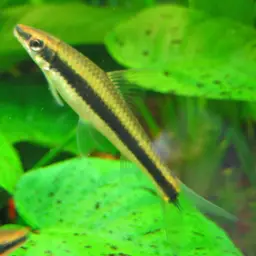
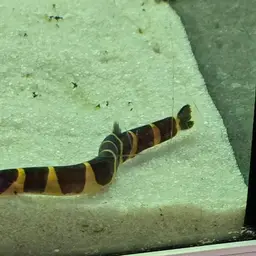

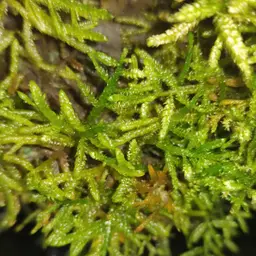
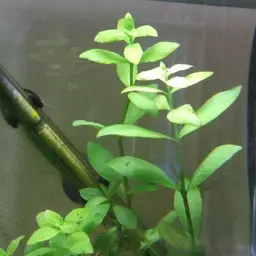
From the same region
Share the same natural habitat. Great for a biotope-themed tank
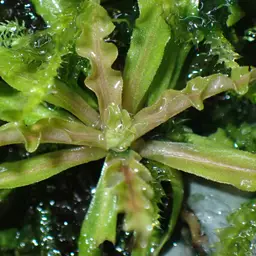
Frequently asked questions
- How big does the Foersch's Mouthbrooder get?
- The Foersch's Mouthbrooder reaches about 1.5–3" as an adult.
- What size tank does the Foersch's Mouthbrooder need?
- A minimum of 14 gallons is recommended for the Foersch's Mouthbrooder.
- What water parameters does the Foersch's Mouthbrooder need?
- The Foersch's Mouthbrooder does best with a temperature of 72–82°F, a pH of 4.5–7, hardness around 2–10 dGH.
- Is the Foersch's Mouthbrooder aggressive?
- The Foersch's Mouthbrooder is generally peaceful and suits a community tank with similarly calm tankmates.
- What does the Foersch's Mouthbrooder eat?
- The Foersch's Mouthbrooder is a carnivore. It needs a meaty, protein-rich diet of frozen or live foods.
- How long does the Foersch's Mouthbrooder live?
- With good care, the Foersch's Mouthbrooder typically lives 5-8 years.