Bichir
Polypterus bichir bichir
Also known as: Cuvier's Bichir, Grey Bichir
A living fossil that breathes air and hunts by smell alone.

About
Found across a huge swath of Africa from Egypt down through Nigeria, Cameroon, Kenya, and beyond, this ancient predator, Polypterus bichir bichir, belongs to a lineage that stretches back over 200 million years to the Triassic Period. Making it a contemporary of the earliest dinosaurs. It looks the part, too: an elongated, armored body adorned with a row of small dorsal finlets gives it an almost prehistoric silhouette unlike anything else in the freshwater hobby. Vision is poor, but an exceptional sense of smell more than compensates, and this nocturnal hunter emerges after dark to track down invertebrates and small fish. One of the most fascinating adaptations is a divided swim bladder that doubles as an accessory breathing organ, allowing the fish to gulp atmospheric air. Deny it surface access and it can actually drown. Young bichirs even develop feathery external gills reminiscent of salamander larvae, which are gradually reabsorbed as they mature. Despite its predatory nature, it is reasonably peaceful toward tankmates too large to swallow, and pairs well with other bichirs, larger catfish, and robust African species. Most individuals sold are wild-caught, so a quarantine period is strongly recommended before introducing one to an established tank.
Similar species
Other fish you might consider
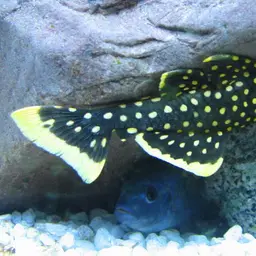
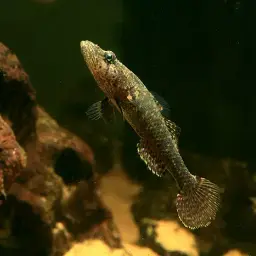
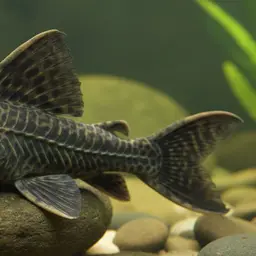
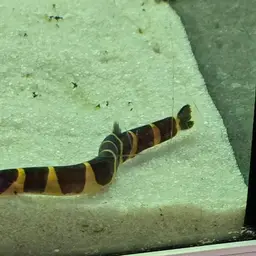
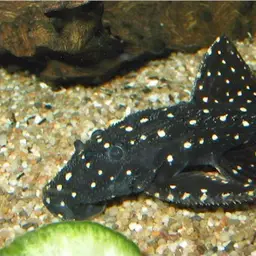
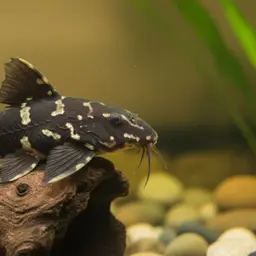
Good tank mates
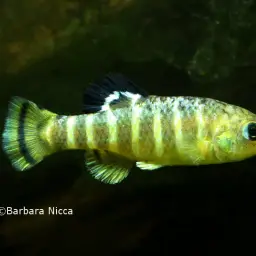
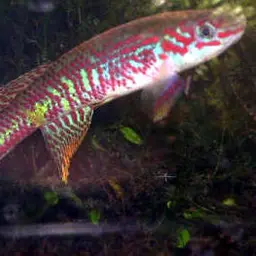
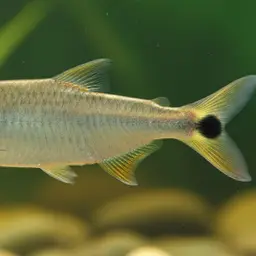
Species that tend to coexist peacefully with Bichir
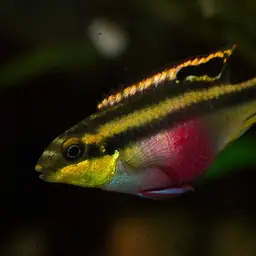

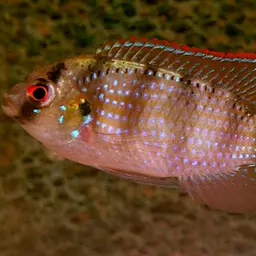
From the same region
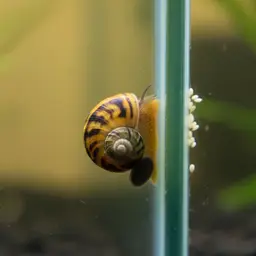
Share the same natural habitat. Great for a biotope-themed tank
Frequently asked questions
- What size tank does the Bichir need?
- A minimum of 172 gallons is recommended for the Bichir.
- What water parameters does the Bichir need?
- The Bichir does best with a pH of 6–8, hardness around 5–25 dGH.
- Is the Bichir aggressive?
- The Bichir is semi-aggressive. It can work in a community with careful tankmate choices and enough space.
- What does the Bichir eat?
- The Bichir is a carnivore. It needs a meaty, protein-rich diet of frozen or live foods.