Aquariumpro
๐Ÿ”

โ˜ฎPeaceful community

Peaceful species that coexist with a wide range of tankmates. The foundation of mixed-species community tanks.

525 species
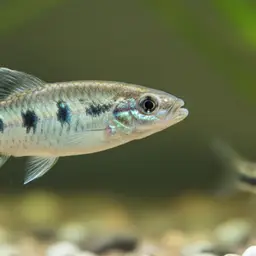
Aci Gรถl Toothcarp
โœจAI

Aci Gรถl Toothcarp

Fish

Aphanius transgrediens

A critically rare Turkish killifish that's more conservation project than casual pet.
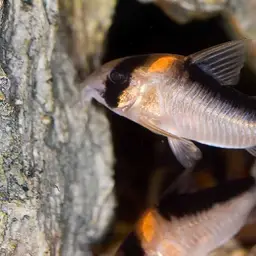
Adolf's Cory

Adolf's Cory

Fish

Corydoras adolfoi

A boldly patterned Rio Negro cory that thrives in lively groups.
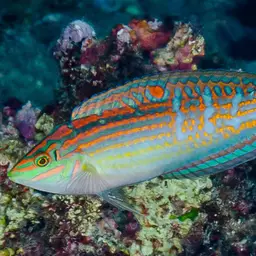
Adorned wrasse

Adorned wrasse

Fish

Halichoeres cosmetus

A reef-dwelling wrasse with detailed patterning earned through its name alone.
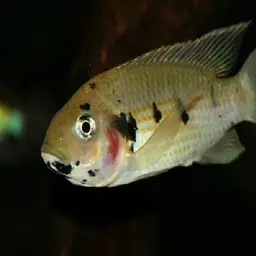
African Blackchin Tilapia

African Blackchin Tilapia

Fish

Sarotherodon melanotheron

A hardy West African mouthbreeder that thrives in brackish and freshwater setups alike.
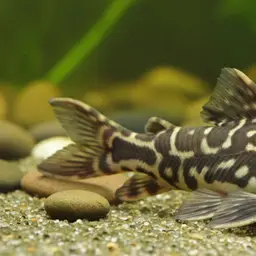
African Bumblebee Catfish
โœจAI

African Bumblebee Catfish

Fish

Microsynodontis batesii

A pint-sized African catfish with bold juvenile patterns that transform as it matures.
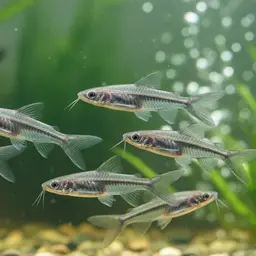
African Glass Catfish
โœจAI

African Glass Catfish

Fish

Pareutropius debauwi

A schooling African catfish with a see-through body and lively personality.
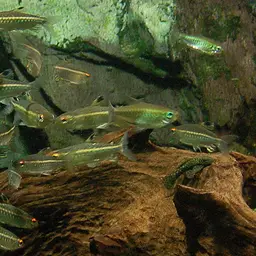
African Red-eyed Tetra

African Red-eyed Tetra

Fish

Arnoldichthys spilopterus

A bold West African schooler with vivid red eyes and iridescent scales worth showing off.
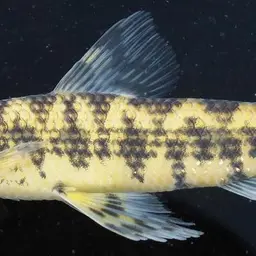
African Striped Darter

African Striped Darter

Fish

Nannocharax fasciatus

A tiny West African characin that rewards patient keepers with fascinating bottom-dwelling behavior.
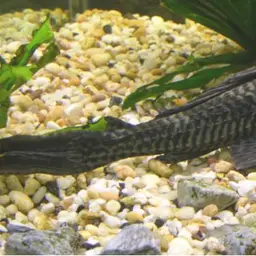
Amazon Sailfin Catfish

Amazon Sailfin Catfish

Fish

Pterygoplichthys pardalis

A gentle giant that moonlights as your tank's algae cleanup crew.
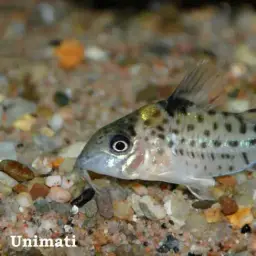
Ambiacus Cory

Ambiacus Cory

Fish

Corydoras ambiacus

A spotty little armored catfish that occasionally surfaces for a gulp of air.
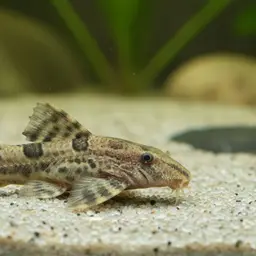
Anchor Catfish
โœจAI

Anchor Catfish

Fish

Erethistes jerdoni

A tiny, peaceful catfish that hides by day and explores by night.
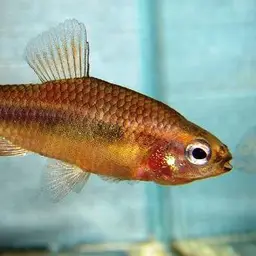
Ansorge's Characin

Ansorge's Characin

Fish

Neolebias ansorgii

A tiny West African gem that rewards patient keepers with rich, unexpected color.
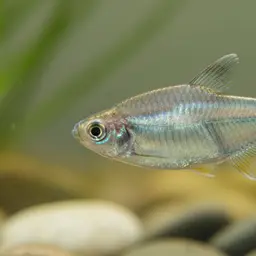
Argentine Tetra
โœจAI

Argentine Tetra

Fish

Hyphessobrycon auca

A little Argentine tetra with subtle details that reward a close look.
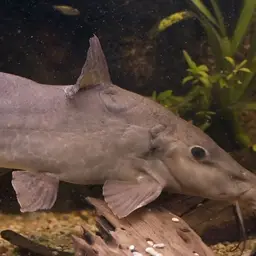
Armoured Catfish

Armoured Catfish

Fish

Auchenoglanis occidentalis

A giraffe-patterned gentle giant that needs serious space to roam.
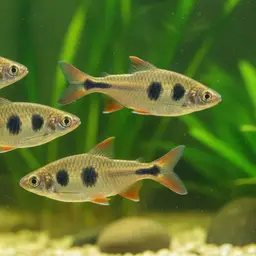
Aruli Barb
โœจAI

Aruli Barb

Fish

Dawkinsia arulius

A long-lived Indian barb that rewards keepers who give it room and company.
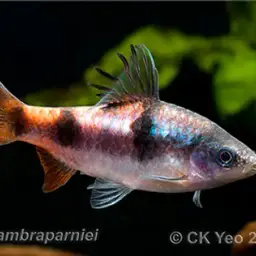
Arulius Barb

Arulius Barb

Fish

Puntius tambraparniei

A lively, schooling barb from South India that rewards you with constant activity.
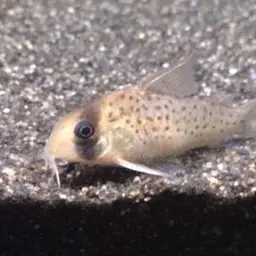
Atropersonatum Cory

Atropersonatum Cory

Fish

Corydoras atropersonatus

A long-lived little armored catfish that actually breathes air from the surface.
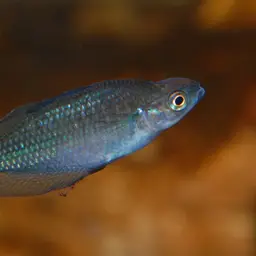
Australian Rainbowfish

Australian Rainbowfish

Fish

Melanotaenia fluviatilis

Australia's most cold-tolerant rainbowfish, built for temperate rivers and cool winters.
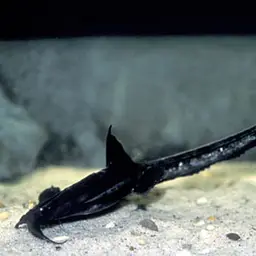
Banded Banjo

Banded Banjo

Fish

Platystacus cotylephorus

A leaf-mimicking catfish that carries its eggs on fleshy belly stalks.
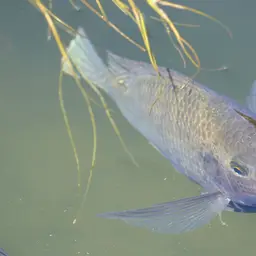
Banded Bream

Banded Bream

Fish

Tilapia sparrmanii

A peaceful, plant-grazing tilapia that pairs up to raise its young.
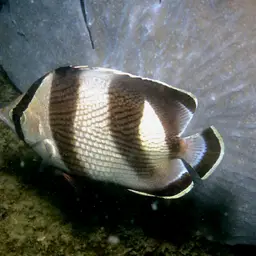
Banded butterflyfish

Banded butterflyfish

Fish

Chaetodon striatus

A Caribbean reef classic that moonlights as a cleaning station attendant.
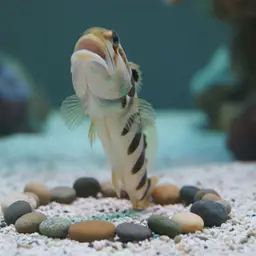
Banded Jawfish
โœจAI

Banded Jawfish

Fish

Opistognathus macrognathus

A burrow-digging Atlantic oddity that broods its eggs in its mouth.
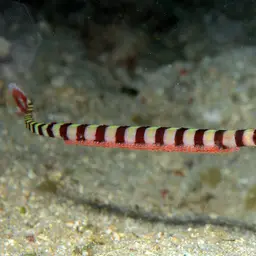
Banded Pipefish

Banded Pipefish

Fish

Dunckerocampus dactyliophorus

A boldly banded reef pipefish that breeds in captivity and hides in caves.
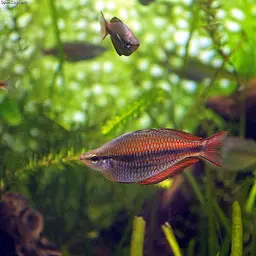
Banded Rainbowfish

Banded Rainbowfish

Fish

Melanotaenia trifasciata

A dazzling Australian native whose true colors take patience to reveal.
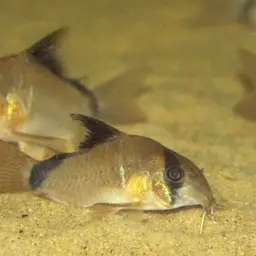
Bandit Cory

Bandit Cory

Fish

Corydoras metae

The bandit-masked cory with a longer lifespan than most fishkeepers expect.
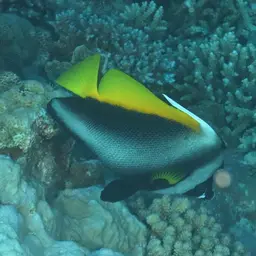
Bannerfish

Bannerfish

Fish

Heniochus singularis

The largest bannerfish, solitary and rarely seen even in the wild.
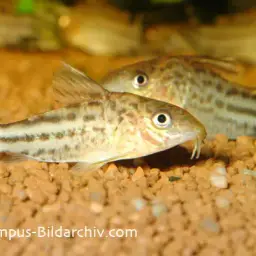
Bannertail Cory

Bannertail Cory

Fish

Corydoras robineae

The bannertail cory: bold markings, fascinating air-gulping behavior, and surprising longevity.
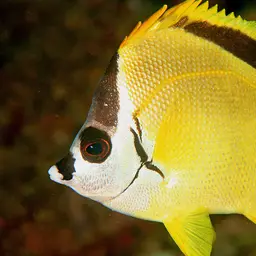
Barberfish

Barberfish

Fish

Johnrandallia nigrirostris

A schooling butterflyfish that moonlights as a cleaner fish on Pacific reefs.
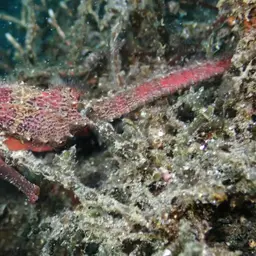
Barbour's Seahorse

Barbour's Seahorse

Fish

Hippocampus barbouri

A boldly patterned seahorse with one of the most ornate snouts in the genus.
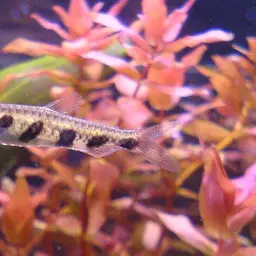
Barred Pencilfish

Barred Pencilfish

Fish

Nannostomus espei

The only pencilfish that wears its night pattern all day long.
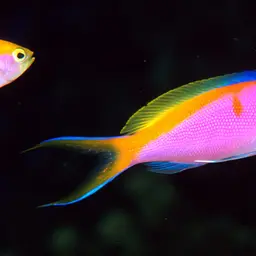
Bartlett's Anthias

Bartlett's Anthias

Fish

Pseudanthias bartlettorum

A sociable reef fish that thrives in groups and brings constant mid-water activity.
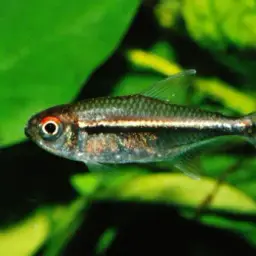
Belgian Flag Tetra

Belgian Flag Tetra

Fish

Hyphessobrycon heterorhabdus

A tricolor tetra named for its flag-like red, yellow, and black striping.
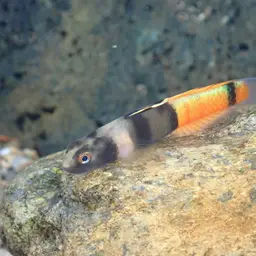
Belted Rockclimbing Goby

Belted Rockclimbing Goby

Fish

Sicyopus zosterophorus

A tiny goby built for life on wet rocks in fast-flowing jungle streams.
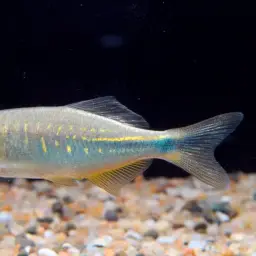
Bengal Danio

Bengal Danio

Fish

Devario devario

A bold, wide-ranging danio that rewards keepers who give it room to school properly.
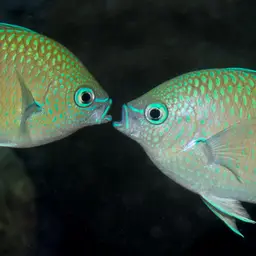
Black-axil Chromis

Black-axil Chromis

Fish

Chromis atripectoralis

A schooling reef damsel that actually plays nice with its tankmates.
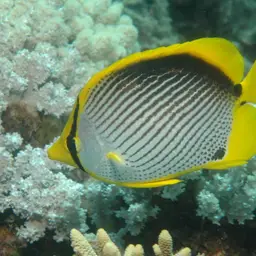
Blackbacked Butterflyfish

Blackbacked Butterflyfish

Fish

Chaetodon melannotus

A boldly patterned reef butterfly with a strong preference for live coral.

Popular strains & varieties

Named color morphs and bred strains across peaceful community species.

Black Mollystrain of MollyJet black from nose to tail fin, with no iridescence or color break โ€” that uniform velvety darkness is the hallmark of a well-bred Black Molly. Watch for faded flanks or brownish undertones when selecting fish; these signal poor genetics or stress. Males are slimmer with a visible gonopodium; females get impressively deep-bodied as they mature. One of the hardiest molly variants, tolerant of a wide salinity range and forgiving of beginner mistakes. A true all-black specimen under good lighting looks almost lacquered, making it one of the most striking fish you can keep in a community tank.Mickey Mouse Platystrain of PlatyNamed for the unmistakable trio of black spots at the base of the tail โ€” one large central spot flanked by two smaller ones โ€” that form a silhouette resembling cartoon ears. The body is typically golden-yellow to orange, making the caudal marking pop dramatically. It's one of the most recognizable platy patterns in the hobby and a perennial bestseller. Fish vary in how crisp the 'mouse' marking is; look for clean, round spots rather than blurry smudges when selecting. Body color can vary between breeders, but the tail spot is the defining feature. Peaceful, hardy, and beginner-friendly.Red Platystrain of PlatyA solid, saturated red covering the entire body and fins with little to no patterning โ€” what you see is a fish that looks almost lacquered. The intensity varies considerably between breeders; the best specimens are a deep brick or blood red rather than a washed-out orange. When selecting, avoid fish with pale bellies or yellow tinting around the head, as these tend to fade further under home conditions. One of the oldest and most widely kept platy strains, it remains a benchmark for comparing color depth in other red-based varieties.Tuxedostrain of GuppyThe Tuxedo's signature is a clean, sharply defined black or dark-blue patch covering the rear half of the body, contrasting against a lighter front โ€” like a fish wearing formal wear. The color division should be crisp, not faded or blotchy; select specimens where the boundary is well-defined. Tail color varies widely across breeders โ€” red, blue, and yellow are all common. Hardy and widely available, Tuxedos are a great entry point into pattern-focused guppy keeping. Watch for line quality, as mass-produced Tuxedos often show muddled patterning.Cobrastrain of GuppyCobras display a distinctive rosette or vertical bar pattern on the body โ€” often described as snake-like scales or a chain-link texture โ€” overlaid on a yellow, gold, or silver base. The pattern should be dense and well-organized across the flank, not sparse or irregular. Tails are typically large and can display lace or mosaic patterning that complements the body. Cobras are a competitive show strain and respond well to high-quality feeding to intensify pattern contrast. Avoid specimens with washed-out ground color, as it dulls the visual impact.Dalmatian Mollystrain of MollyWhite base coloration scattered with irregular black spots and blotches โ€” every individual is uniquely patterned, which gives this variety a lot of visual personality in a group. The spotting should be bold and well-defined; avoid fish where the black has bled into muddy gray patches, as that typically means the strain has weakened. Dalmatians tend to be slightly more light-sensitive during acclimation than plain-colored mollies, so dim the tank when introducing new arrivals. A group of six or more shows off the pattern variation nicely and looks striking against dark substrate.Sunset Platystrain of PlatyA rich gradient from deep orange at the front of the body to a vivid yellow toward the tail, mimicking the colors of a tropical sunset. The fins often pick up the same warm hues, sometimes with a faint dark edging on the dorsal. Under good lighting this variety glows โ€” it's genuinely one of the most attractive mass-market platyfish. Quality varies between suppliers; the best specimens show a smooth, well-defined color transition rather than a patchy blend. Hardy and adaptable. Pairs well with planted tanks where the orange pops against green foliage.Sunset Platystrain of PlatyThe body transitions from a warm golden-orange at the midsection into a deeper reddish-orange or tangerine toward the tail, mimicking the gradient of a sunset sky. The caudal fin often picks up extra color intensity, making the rear half of the fish visually pop. Quality specimens should show a clean, smooth gradient rather than an abrupt color break. Females tend to be less vivid than males but still carry the warm tones well. This is one of the more photogenic platy strains and holds color reliably under good feeding and lighting.King Cobrastrain of GuppyAn enhanced version of the Cobra, the King Cobra layers the characteristic rosette body pattern onto a larger, more imposing fish with a full, heavily patterned tail โ€” often a delta or fantail shape with lace or snakeskin detailing extending into the fins. The gold or yellow body with dense black scaling gives these fish a jeweled appearance. Show-quality King Cobras demand excellent water quality and consistent feeding; the pattern degrades noticeably under stress. They're stunning but require more commitment than standard Cobras to maintain peak condition.Mickey Mouse Platystrain of PlatyNamed for the unmistakable black marking at the base of the caudal fin โ€” one large central spot flanked by two smaller ones โ€” that forms a silhouette resembling the famous cartoon mouse ears. The body is typically golden-yellow to pale orange, providing contrast that makes the tail marking highly visible. It's one of the most recognizable platy patterns and a perennial favorite for community tanks and beginners. The spot pattern is genetically dominant and usually breeds true. Look for crisp, well-defined spots rather than smudged or irregular markings when choosing stock.Red Platystrain of PlatyA solidly built fish covered in deep, uniform red from nose to caudal fin, with fins that match or deepen in hue. The best specimens are a rich brick-to-blood red with no brassy or orange cast โ€” a sign of well-maintained selective breeding lines. Lesser stock often fades toward orange under stress or poor nutrition; a high-carotenoid diet helps maintain intensity. One of the foundational platy varieties and a staple of the hobby for decades. Extremely adaptable and peaceful, making it an easy recommendation for community tanks at any skill level.Silver Mollystrain of MollyA clean, bright silver-white body with a subtle iridescent sheen that catches light differently depending on the angle โ€” under good aquarium lighting these fish almost glow. They lack the yellowish cast of Gold Dust and the spotting of Dalmatians, making them one of the most visually simple mollies, but that simplicity is the point. Select specimens with intact, symmetrical fins and a full silver coat with no patchy yellowing. Silver Mollies are extremely common in the hobby, which means quality can vary widely; look for fish from tanks that show active, upright behavior. Hardy and peaceful.Blue Platystrain of PlatyDisplays a steely blue-gray to slate coloration over the body, often with a subtle iridescent sheen under good lighting. True blues are not as vivid as neon-colored species but have an understated elegance that experienced keepers appreciate. The color depth varies considerably between lines โ€” some lean heavily gray while better-quality strains show a distinctly blue metallic wash. Fins are typically the same tone as the body. Not as widely available as red or sunset varieties, which means quality control can be inconsistent at chain pet stores; seek out specialty breeders for the best color expression.Gold Dust Mollystrain of MollyA warm yellow-gold body dusted with tiny metallic gold flecks concentrated along the back and upper flanks โ€” the shimmer is what separates this variety from plain yellow fish. Under direct light the 'dust' effect is unmistakable, almost like fine glitter embedded in the scales. The gold intensity deepens with age and good nutrition, so high-quality flake supplemented with spirulina will bring out the best color. Avoid specimens that look washed-out or have a dull, opaque yellow rather than that characteristic metallic sheen. A well-conditioned male in peak color is genuinely eye-catching in a planted tank.Moscow Bluestrain of GuppyMoscow Blues cover the entire body in a deep, iridescent blue that shifts toward teal or violet under different lighting โ€” one of the most uniformly colored guppy strains available. The color extends into the dorsal and caudal fins, ideally with no breaks or patchy areas. Full body coverage is the benchmark; specimens with white or faded flanks are lower grade. Moscows generally carry large delta or fan tails that maximize the visual impact of their coloration. They can be more temperature-sensitive than other strains and do best in stable, slightly warmer water around 26โ€“28ยฐC.Wagtail Platystrain of PlatyDefined by jet-black fins โ€” dorsal, caudal, anal, and pectoral โ€” set against a contrasting body color that can range from red and gold to blue or white depending on the base strain it's crossed with. The all-black finnage is the defining character here; a true Wagtail should have fully melanized fins without patchiness. The body color itself is secondary โ€” you'll often see 'Red Wagtail' or 'Sunset Wagtail' named for the base. This is a pattern gene, not a color variety, so mixing Wagtail with other strains is straightforward and commonly done by hobbyists.
Page 1 of 15Next โ†’