Aquariumpro
๐Ÿ”

๐Ÿ’ŽCenterpiece fish

Larger, show-stopping species that become the star of the tank. Requires thoughtful tankmate selection and plenty of space.

283 species
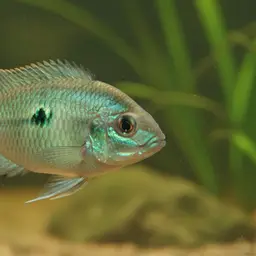
Acara cichlid
โœจAI

Acara cichlid

Fish

Aequidens rondoni

A compact Amazon cichlid with a big personality and surprising longevity.
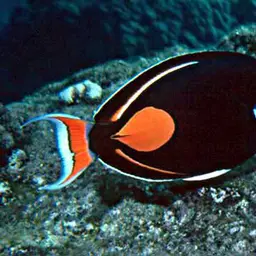
Achilles Tang

Achilles Tang

Fish

Acanthurus achilles

A bold, reef-grazing surgeon with a vivid orange tail patch and a fiery attitude toward rivals.
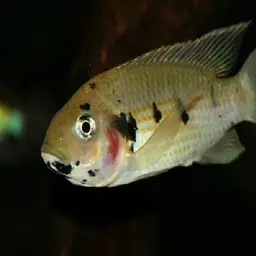
African Blackchin Tilapia

African Blackchin Tilapia

Fish

Sarotherodon melanotheron

A hardy West African mouthbreeder that thrives in brackish and freshwater setups alike.
African blockhead

African blockhead

Fish

Steatocranus casuarius

A bottom-bouncing Congo cichlid with a legendary pair bond and comical personality.
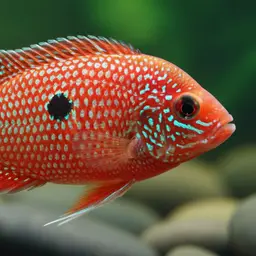
African jewelfish
โœจAI

African jewelfish

Fish

Hemichromis letourneuxi

A bold, pair-bonding cichlid that earns its jeweled reputation through color and attitude.
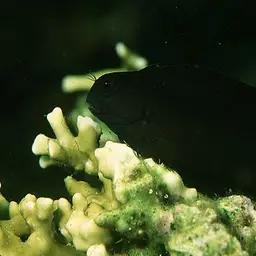
Algae Blenny

Algae Blenny

Fish

Atrosalarias fuscus fuscus

A jet-black reef algae grazer that earns its keep on the rockwork.
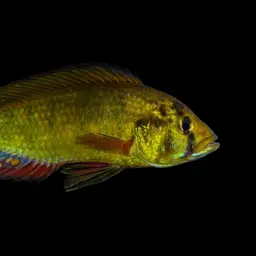
Allauad's Haplo

Allauad's Haplo

Fish

Astatoreochromis alluaudi

A versatile Victorian cichlid with teeth built to crush snails whole.
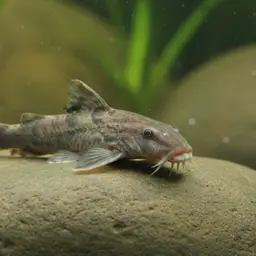
Andean Catfish
โœจAI

Andean Catfish

Fish

Astroblepus ubidiai

A small Ecuadorian mountain catfish with big personality for planted setups.
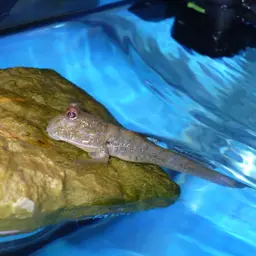
Atlantic Mudskipper

Atlantic Mudskipper

Fish

Periophthalmus barbarus

A true amphibious fish that walks, climbs, and breathes air on land.
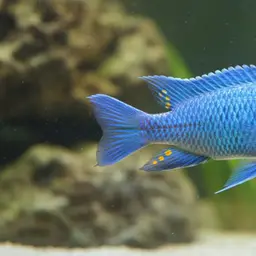
Aurora Cichlid
โœจAI

Aurora Cichlid

Fish

Pseudotropheus aurora

A scrappy Malawi mbuna from the rock-sand interface, with real personality to spare.
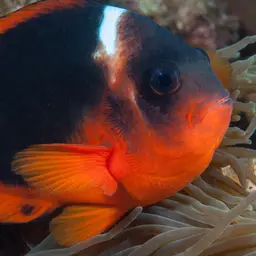
Australian Anemonefish

Australian Anemonefish

Fish

Amphiprion rubrocinctus

Australia's own anemonefish, rarely seen outside its home waters.
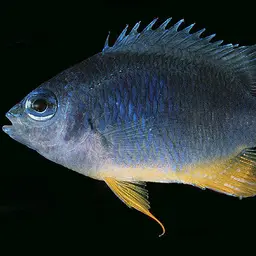
Azure Damselfish

Azure Damselfish

Fish

Chrysiptera hemicyanea

A bold splash of blue and yellow that punches above its small size.
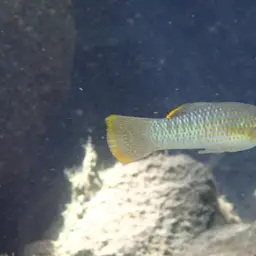
Balsas Molly

Balsas Molly

Fish

Poecilia maylandi

A little-known Mexican molly with big personality and a taste for algae.
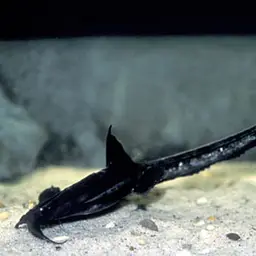
Banded Banjo

Banded Banjo

Fish

Platystacus cotylephorus

A leaf-mimicking catfish that carries its eggs on fleshy belly stalks.
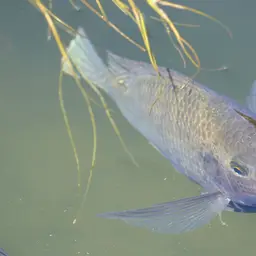
Banded Bream

Banded Bream

Fish

Tilapia sparrmanii

A peaceful, plant-grazing tilapia that pairs up to raise its young.
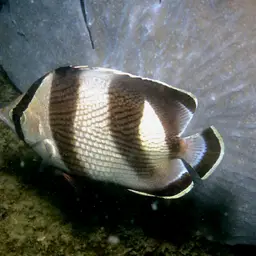
Banded butterflyfish

Banded butterflyfish

Fish

Chaetodon striatus

A Caribbean reef classic that moonlights as a cleaning station attendant.
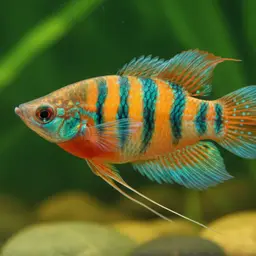
Banded Gourami
โœจAI

Banded Gourami

Fish

Colisa fasciata

A labyrinth fish with bold bands and a surprisingly peaceful personality.
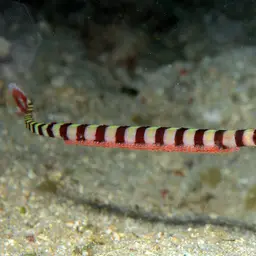
Banded Pipefish

Banded Pipefish

Fish

Dunckerocampus dactyliophorus

A boldly banded reef pipefish that breeds in captivity and hides in caves.
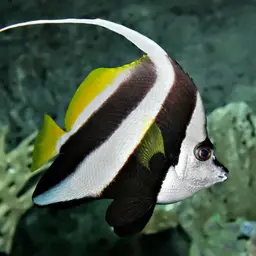
Bannerfish

Bannerfish

Fish

Heniochus acuminatus

A boldly striped banner-finned beauty that cruises reef channels in elegant pairs.
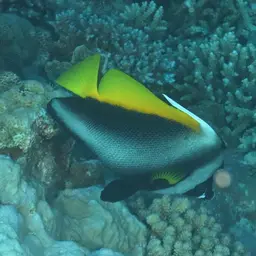
Bannerfish

Bannerfish

Fish

Heniochus singularis

The largest bannerfish, solitary and rarely seen even in the wild.
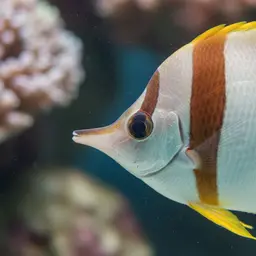
Beaked coralfish
โœจAI

Beaked coralfish

Fish

Chelmon mulleri

A reef butterflyfish that prefers muddy estuaries over pristine coral gardens.
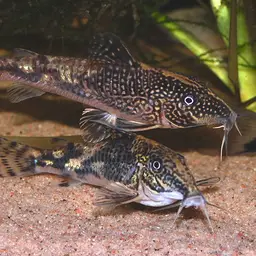
Bearded Cory

Bearded Cory

Fish

Scleromystax barbatus

The giant of the cory world, with a beard and a serious attitude to match.
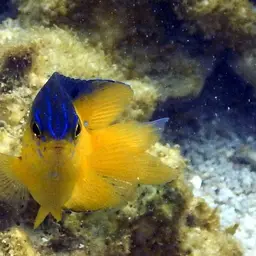
Beau Gregory

Beau Gregory

Fish

Stegastes leucostictus

A small, personable damselfish that tends its own algae garden on the reef floor.
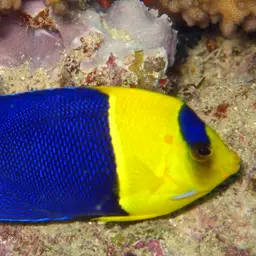
Bicolor Angelfish

Bicolor Angelfish

Fish

Centropyge bicolor

A boldly two-toned dwarf angel that darts and hides across the reef.
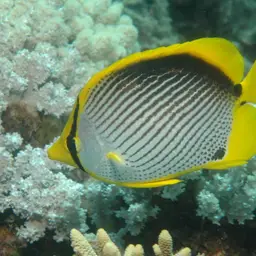
Blackbacked Butterflyfish

Blackbacked Butterflyfish

Fish

Chaetodon melannotus

A boldly patterned reef butterfly with a strong preference for live coral.
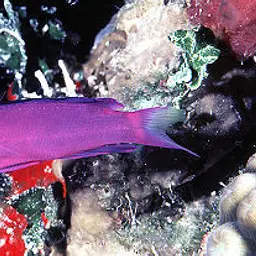
Blackcap Basslet

Blackcap Basslet

Fish

Gramma melacara

A deep-reef beauty that swims upside-down along underwater cliff faces.
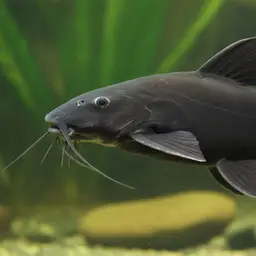
Black Catfish
โœจAI

Black Catfish

Fish

Trachycorystes trachycorystes

A hefty South American catfish with unusual reproductive biology and serious presence.
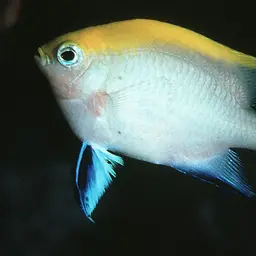
Black Damsel

Black Damsel

Fish

Neoglyphidodon melas

A boldly colored damsel with a feisty attitude that only grows with age.
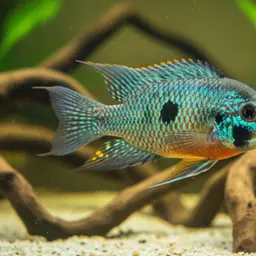
Blackgullet Cichlid
โœจAI

Blackgullet Cichlid

Fish

Thorichthys pasionis

A lesser-known Central American cichlid with bold personality and a distinctive dark throat.
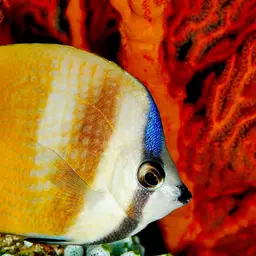
Blacklip Butterflyfish

Blacklip Butterflyfish

Fish

Chaetodon kleinii

A wide-ranging butterflyfish that thrives deeper than most of its relatives.
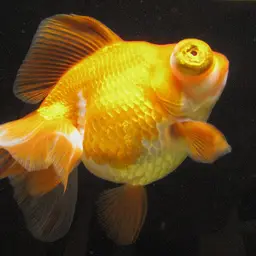
Black Moor Goldfish

Black Moor Goldfish

Fish

Carassius auratus var. blackmoor

The velvety, telescope-eyed goldfish that turns heads in any pond or tank.
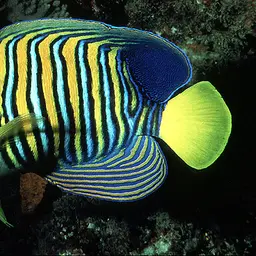
Bluebanded Angelfish

Bluebanded Angelfish

Fish

Pygoplites diacanthus

One of the reef's most recognizable angels, and one of its trickiest to keep.
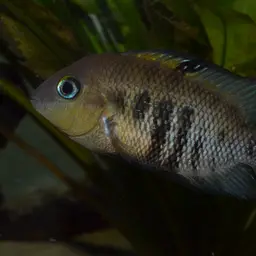
Blue-eye Cichlid

Blue-eye Cichlid

Fish

Cryptoheros spilurus

A compact Central American cichlid with fierce pair bonds and big personality.
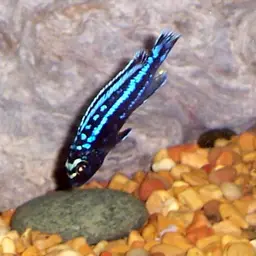
Bluegray Mbuna

Bluegray Mbuna

Fish

Melanochromis johanni

A Lake Malawi rock-dweller with bold colors and bolder attitude.
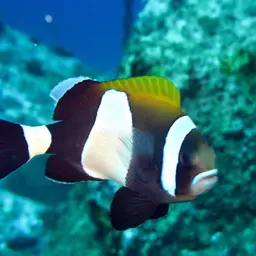
Blue-lip Anemonefish

Blue-lip Anemonefish

Fish

Amphiprion latezonatus

A rare Australian clownfish with bold white bands and a surprisingly deep blue lip.
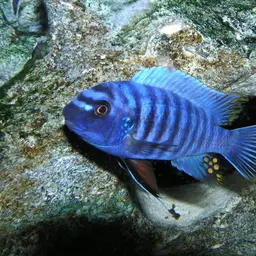
Blue Mbuna

Blue Mbuna

Fish

Labeotropheus fuelleborni

A rock-grazing Lake Malawi cichlid with a bold personality and remarkable color diversity.

Popular strains & varieties

Named color morphs and bred strains across centerpiece fish species.

Black Mollystrain of MollyJet black from nose to tail fin, with no iridescence or color break โ€” that uniform velvety darkness is the hallmark of a well-bred Black Molly. Watch for faded flanks or brownish undertones when selecting fish; these signal poor genetics or stress. Males are slimmer with a visible gonopodium; females get impressively deep-bodied as they mature. One of the hardiest molly variants, tolerant of a wide salinity range and forgiving of beginner mistakes. A true all-black specimen under good lighting looks almost lacquered, making it one of the most striking fish you can keep in a community tank.Gold Stripe Maroonstrain of Maroon ClownfishThe Gold Stripe Maroon is defined by its three broad, gold-to-yellow stripes set against a deep burgundy-red body โ€” a combination that looks almost metallic under aquarium lighting. Juveniles typically show white stripes that gradually transition to gold as the fish matures, usually becoming fully golden around 2โ€“3 years old. This is the most widely kept Maroon variant. When selecting, look for even stripe width and a rich, dark body color; faded or blotchy stripes can indicate stress or poor genetics. Like all Maroons, these fish are notably aggressive โ€” plan tankmate selection carefully and give them a large anemone host if possible.Picassostrain of Ocellaris ClownfishThe Picasso is defined by its wildly irregular white banding โ€” instead of the three clean stripes of a normal Ocellaris, the white patches are smeared, lobed, and connected in unpredictable ways that genuinely look like brushwork. No two fish are identical. Grading matters a lot here: 'High Grade' Picassos show dramatic, extensive white coverage, while lower grades can look almost normal with just a slightly wavy stripe. When buying, look for bold pattern interruptions on at least two bands. A rock-solid captive-bred strain, completely hardy and reef-safe. One of the foundational designer clownfish morphs.Red Swordtailstrain of SwordtailThe classic hobby swordtail โ€” body is a solid, saturated brick-to-cherry red with a yellow-edged sword on the male. Females are plumper and swordless but carry the same red coloration. This is the benchmark strain; if the red looks washed-out or patchy at the store, pass on it. Well-bred individuals should show even color from gill plate to caudal peduncle with no white belly creep. One of the hardiest ornamental strains available, tolerating a wide pH range and forgiving of beginner mistakes. A mainstay of the hobby for over a century.Dalmatian Mollystrain of MollyWhite base coloration scattered with irregular black spots and blotches โ€” every individual is uniquely patterned, which gives this variety a lot of visual personality in a group. The spotting should be bold and well-defined; avoid fish where the black has bled into muddy gray patches, as that typically means the strain has weakened. Dalmatians tend to be slightly more light-sensitive during acclimation than plain-colored mollies, so dim the tank when introducing new arrivals. A group of six or more shows off the pattern variation nicely and looks striking against dark substrate.Green Swordtailstrain of SwordtailMales display an olive-to-bronze body with a distinct red or dark lateral stripe running from behind the eye to the caudal peduncle, and a sword that is yellow-green with a black edge. The overall look is subtler than red strains but highly attractive under good lighting. This strain sits closest to the wild-type pattern while still being a product of selective breeding for consistent coloration and finnage. Look for a clearly defined lateral stripe and a clean sword edge โ€” faded striping usually indicates poor-quality stock. Adapts well to planted tanks.Snowflakestrain of Ocellaris ClownfishSnowflakes carry heavily expanded white bands that blob outward into the orange body, creating irregular snowflake-like splotches of white across the flanks. The pattern variation between individuals is massive โ€” some show mostly white bodies with orange islands, others have a more balanced split. Unlike Picasso, the Snowflake mutation tends to push white coverage more uniformly across all three band positions. Grading is just as important here; higher-grade fish are worth the premium for display tanks. Completely compatible with anemones and standard reef setups. A staple of the captive-bred designer trade.White Stripe Maroonstrain of Maroon ClownfishWhite Stripe Maroons carry the classic three crisp, bright-white stripes on that signature deep maroon body โ€” essentially the 'standard' patterning most people picture when they think of this species. The stripes remain white throughout the fish's life, unlike the Sumatran Gold Stripe form. Body color ranges from a brownish-red in juveniles to a rich, dark burgundy in large adults, particularly in females. These are widely captive-bred and generally considered slightly hardier than some designer variants. Avoid specimens with thin, broken, or yellowing stripes, as that can hint at hybridization or subpar husbandry history.Black Swordtailstrain of SwordtailA striking, dark strain where heavy melanophore expression covers most of the body in deep black or charcoal, often with a subtle iridescent sheen under light. Males carry a black-edged sword that blends dramatically into the body. The best specimens are nearly uniform black with minimal mottling or pale patches on the flanks. Be aware that pure black swordtails can be prone to melanoma โ€” a real concern with highly melanistic lines โ€” so source from reputable breeders who cull aggressively. Pairs beautifully with high-contrast tankmates in a well-lit aquascape.Lightning Maroonstrain of Maroon ClownfishThe Lightning Maroon is immediately unmistakable: its white stripes fragment and branch into wild, irregular lightning bolt patterns across the entire body, sometimes extending into isolated spots and swirls that make every individual unique. This is arguably the most visually spectacular clownfish strain in the hobby. The Lightning pattern is caused by a recessive genetic mutation, and captive breeding programs have established consistent production of Lightning offspring. When buying, understand that pattern intensity and complexity vary โ€” some fish show finer, denser branching while others are simpler. Pair them carefully; Maroons are still highly aggressive regardless of how stunning they look.Platinumstrain of Ocellaris ClownfishPlatinum Ocellaris are almost entirely white with minimal to no orange pigmentation remaining, giving them an ethereal, ghost-like appearance. The best specimens are a clean, creamy white from nose to tail with only faint traces of orange, if any. Black markings in the fins remain, providing contrast against the white body. Platinums result from maximally expressing the white gene, essentially the 'full coverage' end of the Snowflake/Wyoming White spectrum. They're visually striking in reef tanks against colorful corals. Captive-bred and hardy โ€” just make sure you're buying true Platinums and not pale Snowflakes marketed up.Silver Mollystrain of MollyA clean, bright silver-white body with a subtle iridescent sheen that catches light differently depending on the angle โ€” under good aquarium lighting these fish almost glow. They lack the yellowish cast of Gold Dust and the spotting of Dalmatians, making them one of the most visually simple mollies, but that simplicity is the point. Select specimens with intact, symmetrical fins and a full silver coat with no patchy yellowing. Silver Mollies are extremely common in the hobby, which means quality can vary widely; look for fish from tanks that show active, upright behavior. Hardy and peaceful.Gold Dust Mollystrain of MollyA warm yellow-gold body dusted with tiny metallic gold flecks concentrated along the back and upper flanks โ€” the shimmer is what separates this variety from plain yellow fish. Under direct light the 'dust' effect is unmistakable, almost like fine glitter embedded in the scales. The gold intensity deepens with age and good nutrition, so high-quality flake supplemented with spirulina will bring out the best color. Avoid specimens that look washed-out or have a dull, opaque yellow rather than that characteristic metallic sheen. A well-conditioned male in peak color is genuinely eye-catching in a planted tank.Gold Nugget Maroonstrain of Maroon ClownfishGold Nugget Maroons โ€” also sold as Gold Flake Maroons โ€” display the Lightning Maroon's fragmented, branching stripe pattern but expressed in gold rather than white, creating a dramatic mosaic of gold splotches and irregular markings over a deep maroon body. The gold coloration develops with age, so juveniles may show less impressive patterning than adults; buy with that trajectory in mind. Because this variant combines two complex traits (Lightning pattern + Gold stripe genetics), it remains relatively rare and commands premium prices. Captive-bred specimens are strongly preferred โ€” wild-caught examples with this pattern combination are essentially nonexistent as a reliable source.Wagtail Swordtailstrain of SwordtailThe defining trait here is the jet-black fins against a body that can be almost any base color โ€” most commonly red or red-and-white. Every fin, including dorsal, anal, pectoral, and the sword, is solidly pigmented black, creating a bold contrast that reads clearly even across a large tank. The 'wagtail' pattern is a genetic modifier layered over existing body-color strains, so you'll see red wagtail, pineapple wagtail, and so on. When selecting, prioritize specimens where the black fin coloration is dense and unbroken rather than faded or peppered. A staple of the pet trade.Wyoming Whitestrain of Ocellaris ClownfishWyoming Whites are a specific, genetically distinct all-white strain โ€” not just a high-grade Snowflake. They show an almost completely white body with clear-to-translucent fins and very reduced black edging, giving them a softer, icier look than Platinums. The eyes are typically dark, which makes them pop against the pale body. This strain breeds true, which is an important distinction from simply color-grading Snowflakes. They're peaceful, captive-bred, and reef-safe. If you're comparing Wyoming White to Platinum side by side, Wyoming Whites often look cooler and cleaner in tone, with less creamy warmth.
Page 1 of 8Next โ†’