Aquariumpro
πŸ”

Cichlids

Intelligent, often territorial fish with some of the most elaborate parenting behavior in the hobby. Cichlids range from peaceful dwarfs to formidable centerpieces.

338 species
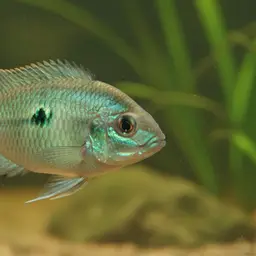
Acara cichlid
✨AI

Acara cichlid

Fish

Aequidens rondoni

A compact Amazon cichlid with a big personality and surprising longevity.
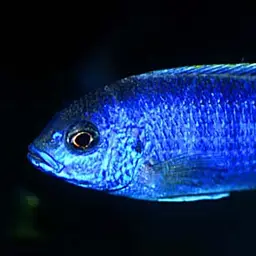
Acei

Acei

Fish

Pseudotropheus sp. "Acei"

The only mbuna that feeds exclusively on submerged wood in the wild.
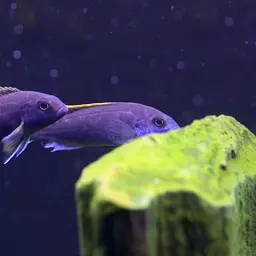
Acei Cichlid

Acei Cichlid

Fish

Pseudotropheus acei

A bold Lake Malawi cichlid that brings real personality to a species tank.
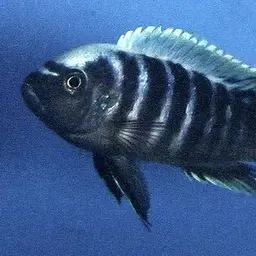
Afra Cichlid

Afra Cichlid

Fish

Cynotilapia afra

A scrappy Malawi mbuna that rewrites the rules with open-water schooling behavior.
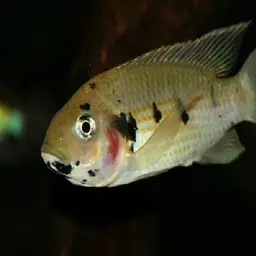
African Blackchin Tilapia

African Blackchin Tilapia

Fish

Sarotherodon melanotheron

A hardy West African mouthbreeder that thrives in brackish and freshwater setups alike.
African blockhead

African blockhead

Fish

Steatocranus casuarius

A bottom-bouncing Congo cichlid with a legendary pair bond and comical personality.
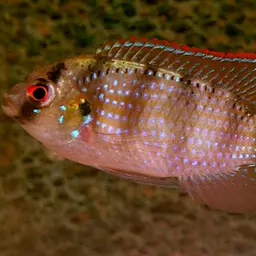
African Butterfly Cichlid

African Butterfly Cichlid

Fish

Anomalochromis thomasi

A shy, peaceable little cichlid that rewards patient keepers with devoted parenting.
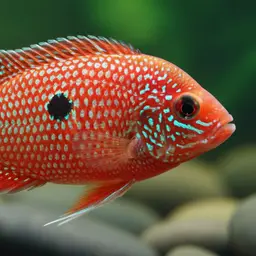
African jewelfish
✨AI

African jewelfish

Fish

Hemichromis letourneuxi

A bold, pair-bonding cichlid that earns its jeweled reputation through color and attitude.
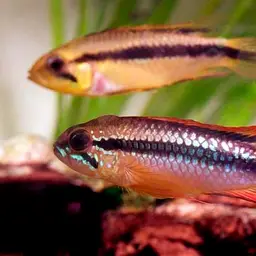
Agassiz's Dwarf Cichlid

Agassiz's Dwarf Cichlid

Fish

Apistogramma agassizii

A jewel of the Amazon riverbed with big cichlid personality in a small package.
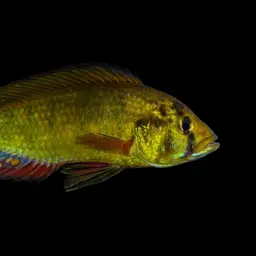
Allauad's Haplo

Allauad's Haplo

Fish

Astatoreochromis alluaudi

A versatile Victorian cichlid with teeth built to crush snails whole.
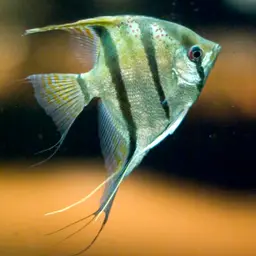
Angelfish

Angelfish

Fish

Pterophyllum scalare

The iconic cichlid that started countless freshwater fishkeeping journeys.
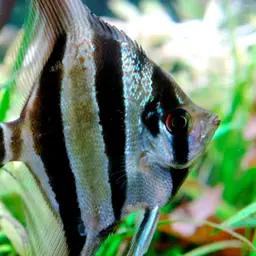
Angel Fish

Angel Fish

Fish

Pterophyllum altum

The wild angelfish that makes the common angel look easy.
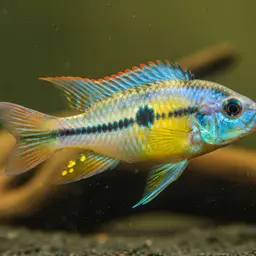
Apisto Blue Head
✨AI

Apisto Blue Head

Fish

Apistogramma resticulosa

A cave-spawning dwarf cichlid from a single Brazilian river system.
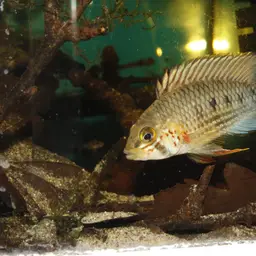
Apisto Red Spot

Apisto Red Spot

Fish

Apistogramma cinilabra

A compact Peruvian dwarf cichlid with ashy lips and a body built like a brick.

Astatheros macracanthus

Astatheros macracanthus

Fish

Amphilophus macracanthus

A hefty Central American cichlid built for life on the riverbed.
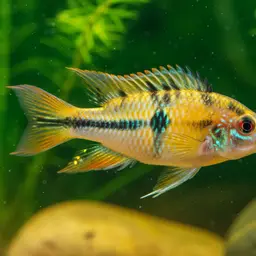
Atahualpa Dwarf Cichlid
✨AI

Atahualpa Dwarf Cichlid

Fish

Apistogramma atahualpa

A jewel-sized Amazonian dwarf cichlid with fierce maternal instincts.
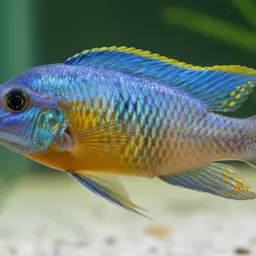
Auditor Peacock Cichlid
✨AI

Auditor Peacock Cichlid

Fish

Aulonocara auditor

A sand-sifting Lake Malawi cichlid from a tiny northern shoreline range.
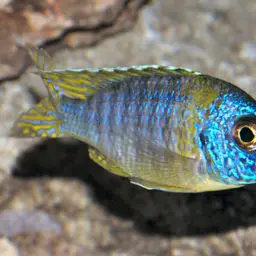
Aulonocara Chizumulu

Aulonocara Chizumulu

Fish

Aulonocara korneliae

A rock-dweller that hunts the sand, endemic to one Malawian island.
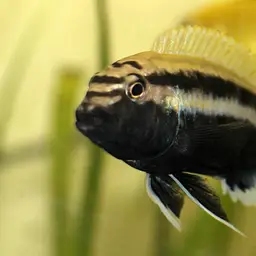
Auratus Cichlid

Auratus Cichlid

Fish

Melanochromis auratus

A brilliantly colored mbuna with an attitude that demands respect and careful tankmates.
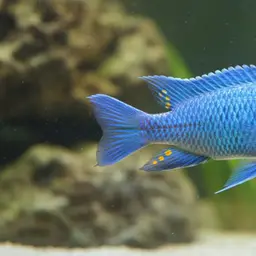
Aurora Cichlid
✨AI

Aurora Cichlid

Fish

Pseudotropheus aurora

A scrappy Malawi mbuna from the rock-sand interface, with real personality to spare.
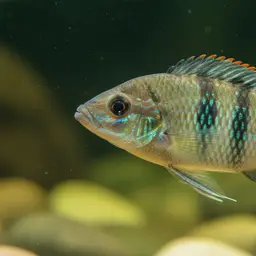
Banded Acara
✨AI

Banded Acara

Fish

Bujurquina vittata

A devoted South American cichlid that carries its babies in its mouth.
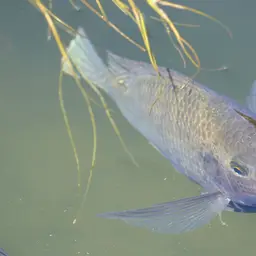
Banded Bream

Banded Bream

Fish

Tilapia sparrmanii

A peaceful, plant-grazing tilapia that pairs up to raise its young.
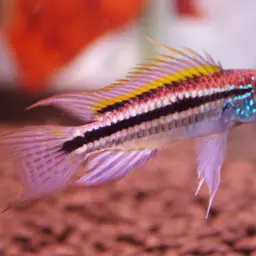
Banded Dwarf Cichlid

Banded Dwarf Cichlid

Fish

Apistogramma bitaeniata

A jewel of Amazonian blackwater, with color forms varying by river system.
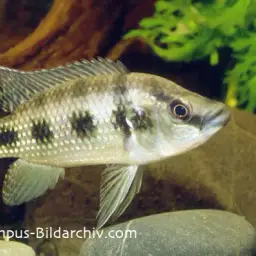
Banded Jewel Cichlid

Banded Jewel Cichlid

Fish

Hemichromis elongatus

A jewel cichlid with a reputation for being the most aggressive in the genus.
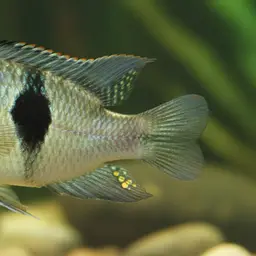
Bandit Acara
✨AI

Bandit Acara

Fish

Guianacara geayi

A harem-keeping cichlid from French Guiana's rocky, fast-running streams.
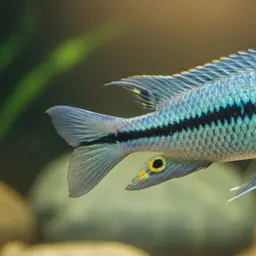
Basket Hap
✨AI

Basket Hap

Fish

Mylochromis lateristriga

A sandy-bay predator from Lake Malawi with a taste for crustaceans.
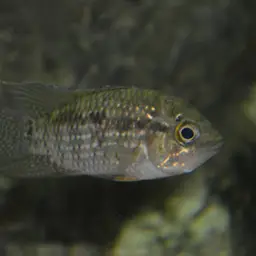
Bigeye Cichlid

Bigeye Cichlid

Fish

Acaronia nassa

A wide-eyed Amazonian ambush predator that makes the most of its stillness.
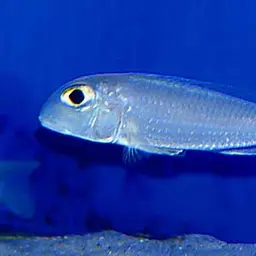
Bigeye Xenotilapia

Bigeye Xenotilapia

Fish

Xenotilapia sima

A sand-sifting Tanganyikan schooler that rarely turns up in the hobby
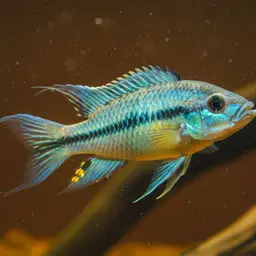
Bigmouth
✨AI

Bigmouth

Fish

Apistogramma norberti

A pocket-sized Peruvian cichlid with a big personality and cave-spawning habits.
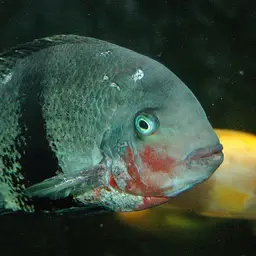
Blackbelt Cichlid

Blackbelt Cichlid

Fish

Vieja maculicauda

A bold, brawny Central American cichlid with a namesake black band and real attitude.
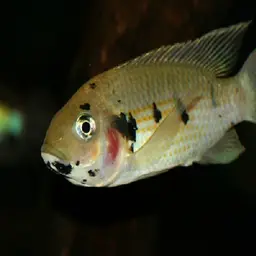
Blackchin Tilapia

Blackchin Tilapia

Fish

Sarotherodon melanotheron melanotheron

A tough West African cichlid where dad handles all the childcare duties.
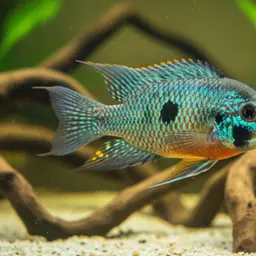
Blackgullet Cichlid
✨AI

Blackgullet Cichlid

Fish

Thorichthys pasionis

A lesser-known Central American cichlid with bold personality and a distinctive dark throat.
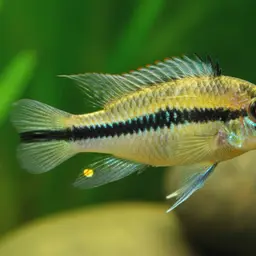
Blackline Apisto
✨AI

Blackline Apisto

Fish

Apistogramma gibbiceps

A cave-spawning dwarf cichlid from the blackwater rivers of the Amazon basin.
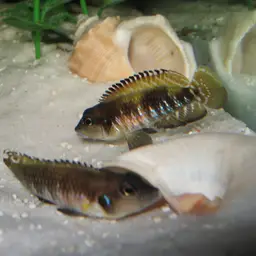
Black Ocellatus

Black Ocellatus

Fish

Lamprologus speciosus

A pint-sized shell-brooding cichlid from Lake Tanganyika with outsized attitude.
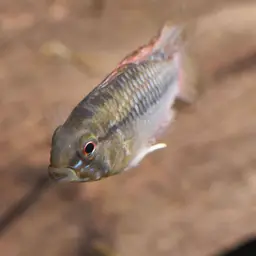
Blackseam Cichlid

Blackseam Cichlid

Fish

Apistogramma hongsloi

A compact Colombian dwarf cichlid that pairs up and parents together.
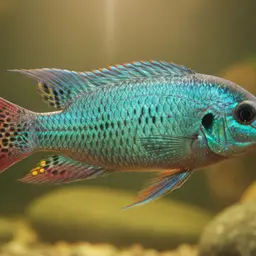
Black-throated Eartheater
✨AI

Black-throated Eartheater

Fish

Geophagus brachybranchus

A sand-sifting eartheater with elaborate mouthbrooding parental care and a surprisingly gentle nature.

Popular strains & varieties

Named color morphs and bred strains across cichlids species.

Blue Diamondstrain of DiscusA solid, uniform electric blue covers the entire body β€” no vertical bars, no patterning, just clean unbroken color from nose to tail. The best specimens look almost metallic under bright lighting. This is one of the most popular discus in the hobby for a reason: it photographs beautifully and reads well in any aquascape. When selecting, reject fish with patchy blue or visible ghost barring, which indicates incomplete line-breeding. Pairs tend to be reliable parents. Water quality demands are typical discus β€” soft, warm, and pristine β€” but Blues are considered among the hardier fancy strains.Heckel Crossstrain of DiscusThe Heckel Cross is a first-generation hybrid between a pure Symphysodon discus and a domesticated Symphysodon aequifasciatus strain, most often a Turquoise or Blue Diamond. The result is a fish that retains the bold, dark 1st, 5th, and 9th bars characteristic of the Heckel while layering in iridescent blue or turquoise patterning across the body. The bars are typically softer than a pure Heckel but still clearly dominant. Coloration can vary widely depending on the domestic parent used. Hardier than pure Heckel and more forgiving of slightly harder water, these are often recommended as a gateway into the Heckel look without the strict soft-water demands.Silverstrain of AngelfishThe closest thing to a classic wild look in the hobby, Silver angels display a bright metallic silver body with three bold vertical black stripes β€” one through the eye, one mid-body, and one near the tail. The bars intensify under stress or during spawning, making mood-reading easy. Fins are clear to lightly tinted. This strain is the benchmark for body conformation; if you're evaluating whether a fish has good depth, roundness, and fin placement, start here. Excellent for beginners and breeders alike. Wild-caught coloration may vary, but tank-bred lines are reliably consistent.Marblestrain of AngelfishMarbles are immediately recognizable by their swirling, irregular black-and-white patterning β€” no two fish look exactly alike, which is a huge part of their appeal. The pattern results from the marble gene (M), a dominant mutation that disrupts normal stripe formation. Gold Marble variants add warm amber tones to the mix. When buying, look at the contrast and coverage; heavily marbled fish with crisp black patches on bright white tend to be the showstoppers. Pattern continues shifting slightly as the fish matures, so young marbles are always a little unpredictable.Red Heckelstrain of DiscusRed Heckels are wild-caught Symphysodon discus specimens β€” primarily from the Rio Negro and its blackwater tributaries β€” selected specifically for intense reddish-orange base coloration overlaid with the classic three dominant Heckel bars. The body background shifts toward warm amber-red tones rather than the more common brown or olive base, and the iridescent striping often carries a blue-green shimmer in good light. These fish are not a captive-bred strain in the traditional sense; they are a regional color form. Expect strict water requirements: very soft (< 50 ppm TDS), acidic (pH 4.5–6.0), and warm (82–86Β°F). Acclimation is slow β€” don't rush it.Red Turquoisestrain of DiscusBrilliant turquoise-blue horizontal stripes run across a warm red-orange base, creating one of the most striking contrast patterns in the discus hobby. The red ground color should be deep and saturated, not washed out, and the turquoise lines should be tight, well-defined, and numerous. Fish with broad, broken, or sparse striping are lower-grade specimens. The caudal and dorsal fins often carry strong red pigmentation that extends the base color nicely. Red Turquoise are a benchmark strain β€” if you see a discus in a tank photo and can't stop staring, it's probably this variety.Blue Turquoisestrain of DiscusSimilar in pattern to Red Turquoise but built on a cooler blue-grey to steel-blue base rather than a red one. The horizontal turquoise striping is the same hallmark, but the overall palette reads calm and oceanic rather than fiery. Quality specimens show dense, fine striping across the full body disc including the forehead, with minimal brown or grey showing through between lines. Many hobbyists prefer this variety in Dutch-style planted tanks where the cooler tones complement green foliage. It's a classic strain and widely available, making it a good entry point into patterned discus.Heckel Wildstrain of DiscusThe classic wild-caught Symphysodon discus, collected from blackwater systems of the central Amazon basin β€” most famously the Rio Negro around Barcelos. Instantly identified by the three dramatically thickened, jet-black bars (bars 1, 5, and 9) standing out against a brown to olive-grey body with finer blue or red wavy striping across the flanks. No two fish look identical, and locality variation is significant. These are demanding fish: they require near-distilled, warm, acidic blackwater conditions to thrive and are intolerant of the shortcuts that captive-bred discus forgive. Wild feeding can be challenging early on β€” live or frozen foods are often necessary to get them eating reliably.Koistrain of AngelfishKoi angels combine the orange-red blush of the blushing gene with a marbled black-and-white body pattern, evoking the look of a koi pond fish β€” hence the name. The orange is most vivid around the face and shoulders, and the best specimens have that splash of warm color against a cleanly marbled body. Color intensity varies considerably between breeders; fish from quality lines hold their orange into adulthood, while cheaper stock often fades. Diet high in carotenoids (quality color-enhancing foods, live/frozen) helps maintain the warm hues. A perennial bestseller at fish stores.Pigeon Bloodstrain of DiscusBold yellow-orange to deep orange-red base with dark, irregular black speckling or peppering scattered across the body β€” this is the 'dirt' that beginners sometimes mistake for disease. The pepper pattern is genetic and normal; fish with no pepper at all are often the result of hormone treatment and best avoided. Eyes are typically red. The Pigeon Blood gene has been crossed into dozens of other strains, but pure Pigeon Bloods remain popular for their warm, saturated warmth. Fins tend to be clear to lightly pigmented. Robust and relatively forgiving compared to some fancy strains.Zebrastrain of AngelfishWhere a Silver angel has three vertical bars, the Zebra has four or more β€” the extra bars fill in across the body, creating a densely striped pattern that earns the name. The body is silver-white and the bars are deep, high-contrast black. They're often confused with wild-caught fish but are a true selectively bred strain. Look for even bar width and consistent bar color when selecting; uneven or faded bars can indicate stress or poor genetics. A visually striking fish that photographs extremely well. Behavior and care are identical to other P. scalare strains.Black Lacestrain of AngelfishBlack Lace angels are Silver or Zebra fish carrying one copy of the Dark gene (D/+), which overlays a fine black lacework pattern across the fins and body. The effect is subtle and elegant β€” silvery background with a dark, almost smoky web of pigment. A fish carrying two copies of the Dark gene becomes a Double-Dark or "Black" angel, which is near-solid black. Black Lace fish are robust and commonly available. They tend to darken in low-light conditions and show their best patterning in a well-planted tank with a dark substrate.Marlboro Redstrain of DiscusAn intensely uniform red to red-orange fish with minimal patterning β€” think of a cleaner, more saturated version of a red discus that holds its color edge-to-edge. Top specimens have a rich, deep red over the entire disc with clear to faintly yellow fins. The challenge with Marlboro Reds is that color can fade significantly with poor diet or substandard water; this is a strain where feeding high-quality color-enhancing foods (astaxanthin-based) makes a visible difference. Avoid fish showing patchy color or brownish undertones, which indicate stress or weak genetics.Half-Blackstrain of AngelfishHalf-Blacks have a sharp, almost painterly division: the front half of the body is silver or lightly colored, while the rear half transitions to deep, solid black. When the dividing line is crisp and the black is fully saturated, it's one of the most dramatic color patterns in freshwater fishkeeping. Quality varies enormously β€” the transition should be distinct, not a muddy gradient. The black coloration is caused by a separate genetic mechanism from the Dark gene. Fin development and body depth should still meet standard conformation expectations; don't let striking color distract from evaluating overall fish quality.Snakeskinstrain of DiscusOne of the most complex-looking discus varieties: fine, squiggly, closely packed lines or dots cover the body in a pattern that genuinely resembles snake or reptile scales. The base color can range from tan to brown to orange depending on the line, but the intricate overprint pattern is what defines this variety. High-grade Snakeskins have dense, continuous patterning without large unbroken patches of base color showing through. The pattern takes time to fully develop β€” juveniles often look muddy until about 8–10 cm. A truly well-marked specimen is one of the most visually complex fish in freshwater.Blushingstrain of AngelfishBlushing angels carry two recessive copies of the stripeless gene (S/S), which eliminates the black vertical bars and removes much of the chromatophore coverage from the gill area β€” leaving the gill plates translucent and revealing the pinkish-red underlying tissue, the so-called "blush." The body is pale silver to white, sometimes with a faint golden or warm tint. They look almost angelic (appropriate). The blushing trait is a building block for Koi and other compound strains. Pure Blushing fish are a bit delicate compared to striped variants; they can stress more visibly and benefit from stable, clean water.
Page 1 of 10Next β†’