Aquariumpro
πŸ”

Livebearers

Guppies, mollies, platies, and swordtails β€” hardy, prolific fish that bear live young. A classic starting point for new hobbyists and a staple of community tanks worldwide.

41 species
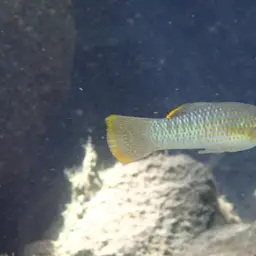
Balsas Molly

Balsas Molly

Fish

Poecilia maylandi

A little-known Mexican molly with big personality and a taste for algae.
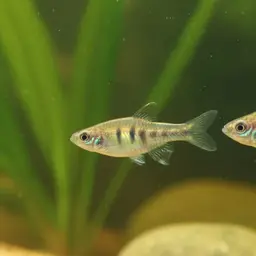
Barred Topminnow
✨AI

Barred Topminnow

Fish

Quintana atrizona

A tiny Cuban livebearer that disappears into dense plant thickets.
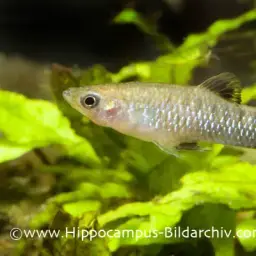
Black Bellied Limia

Black Bellied Limia

Fish

Limia melanogaster

A rarely seen Caribbean livebearer with bold dark coloring and lively personality.
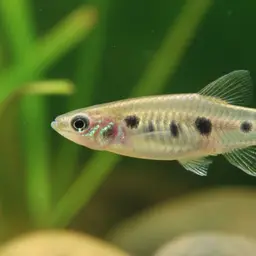
Blackspotted Toothcarp
✨AI

Blackspotted Toothcarp

Fish

Phallichthys tico

A tiny, peaceful livebearer from Costa Rica's murky highland streams.
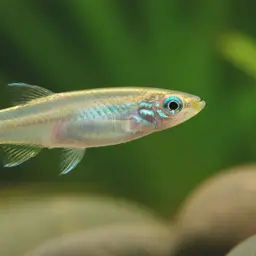
Brichard's Lampeye
✨AI

Brichard's Lampeye

Fish

Aplocheilichthys brichardi

A delicate Congo lampeye that rewards patient, experienced keepers.
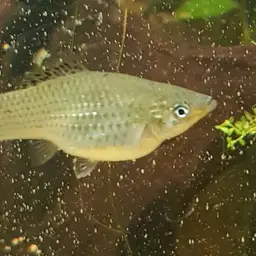
Catemaco Platyfish

Catemaco Platyfish

Fish

Xiphophorus milleri

A rare Mexican platyfish from one lake, suited for species-focused setups.
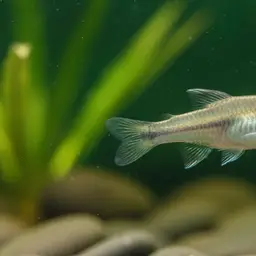
Creole Topminnow
✨AI

Creole Topminnow

Fish

Girardinus creolus

A rare Cuban livebearer that occupies the middle of the water column.
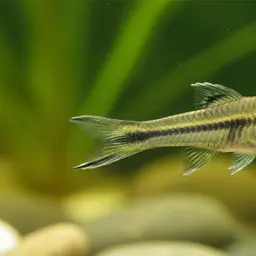
Delicate Swordtail
✨AI

Delicate Swordtail

Fish

Xiphophorus cortezi

A gentle, lesser-known Mexican swordtail for the planted community tank.
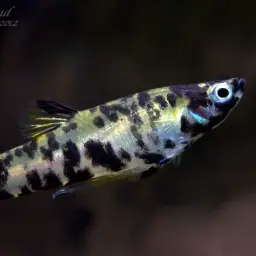
Dusky Millions Fish

Dusky Millions Fish

Fish

Phalloceros caudimaculatus

A tiny livebearing fish with remarkable color variety and surprisingly persistent males.
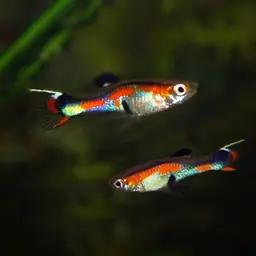
Endler's Livebearer

Endler's Livebearer

Fish

Poecilia wingei

Jewel-bright nano livebearer that breeds almost faster than you can plan for it.
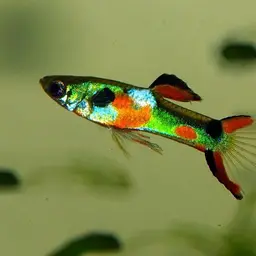
Guppy

Guppy

Fish

Poecilia reticulata

The world's most recognizable livebearer, and probably the easiest fish to breed.
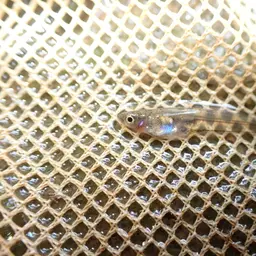
Guppy

Guppy

Fish

Tomeurus gracilis

A tiny Venezuelan oddity that lays eggs despite fertilizing them internally.
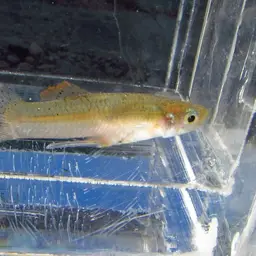
Hispaniolan Gambusia

Hispaniolan Gambusia

Fish

Gambusia hispaniolae

A tough livebearing minnow from Hispaniola's brackish spring habitats.
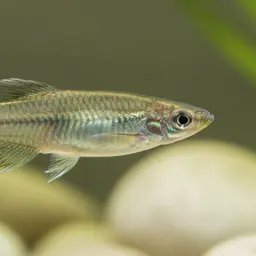
Huber's Knife Livebearer
✨AI

Huber's Knife Livebearer

Fish

Alfaro huberi

A sleek Central American livebearer built for fast, clear currents.
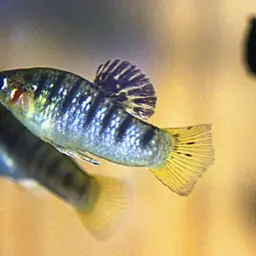
Humpback Limia

Humpback Limia

Fish

Limia nigrofasciata

A livebearing oddity from Haiti with a distinctive fatty hump on mature males.
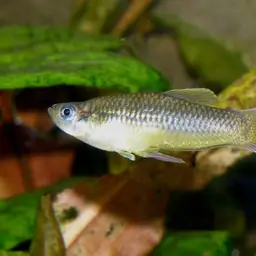
Isthmian Priapella

Isthmian Priapella

Fish

Priapella intermedia

A sleek Mexican livebearer that leaps clear of the water to catch insects.
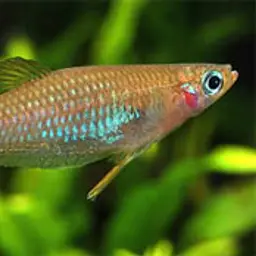
Knife Livebearer

Knife Livebearer

Fish

Alfaro cultratus

A tough little livebearer with a blade-like keel and a feisty personality.
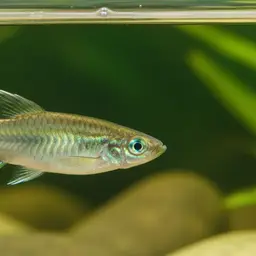
Large Finned Lampeye
✨AI

Large Finned Lampeye

Fish

Procatopus nototaenia

A forest stream lampeye that rewards patient, experienced keepers.
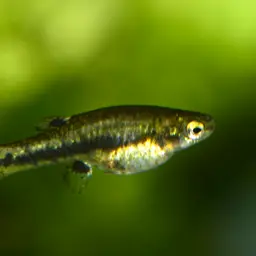
Least Killifish

Least Killifish

Fish

Heterandria formosa

One of the world's smallest fish, with a uniquely continuous birthing process.
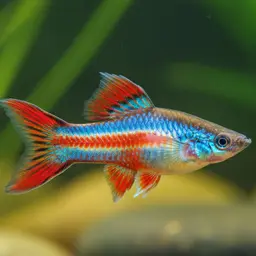
Liberty Molly
✨AI

Liberty Molly

Fish

Poecilia salvatoris

A scrappy Central American molly with bold looks and a bold attitude.
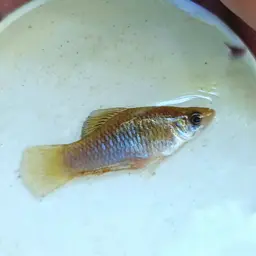
Merry Widow

Merry Widow

Fish

Phallichthys amates

A low-key Central American livebearer that thrives where flashier fish struggle.
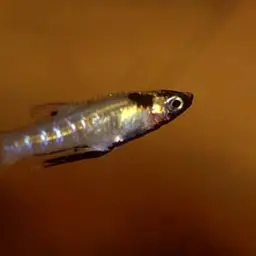
Metallic Topminnow

Metallic Topminnow

Fish

Girardinus metallicus

A livebearer from Cuba with a glinting metallic sheen and real historical quirks.
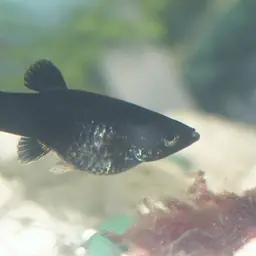
Molly

Molly

Fish

Poecilia sphenops

A livebearer classic that can thrive from freshwater all the way to full marine conditions.
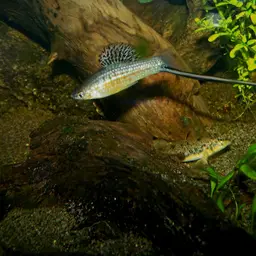
Montezuma Swordtail

Montezuma Swordtail

Fish

Xiphophorus montezumae

A wild swordtail with an absurdly long tail sword that rivals its own body length.
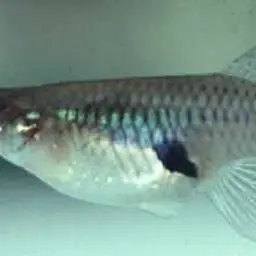
Mosquitofish

Mosquitofish

Fish

Gambusia affinis

The notorious mosquitofish: tough, prolific, and not a friendly neighbor.
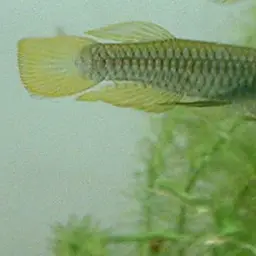
Norman's Lampeye

Norman's Lampeye

Fish

Poropanchax normani

Tiny West African killifish with glowing blue eyes that shimmer in low light.
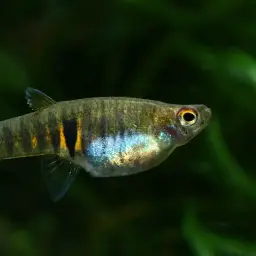
Orange dwarf toothcarp

Orange dwarf toothcarp

Fish

Neoheterandria elegans

A tiny Colombian livebearer with a fascinating near-mammalian reproductive twist.
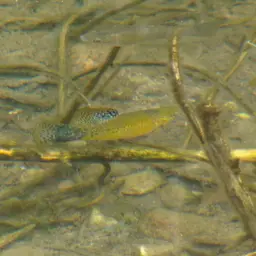
Pacific Molly

Pacific Molly

Fish

Poecilia butleri

A personable little livebearer that grazes algae and practically eats from your hand.
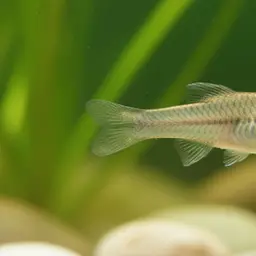
Picotee Livebearer
✨AI

Picotee Livebearer

Fish

Phallichthys fairweatheri

A gentle little livebearer from Central America's marshy backwaters.
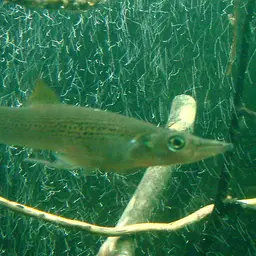
Pike killifish

Pike killifish

Fish

Belonesox belizanus

A surface-hunting predator built like a pike, from Central American wetlands.
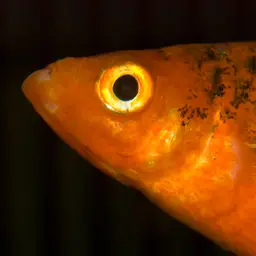
Platy

Platy

Fish

Xiphophorus maculatus

The beginner-proof livebearer that comes in more color forms than you can count.
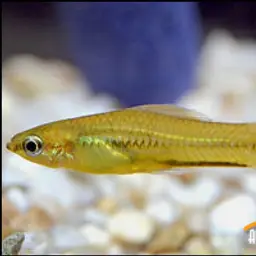
Pygmy Swordtail

Pygmy Swordtail

Fish

Xiphophorus pygmaeus

A pint-sized livebearer with all the personality of its larger swordtail cousins.
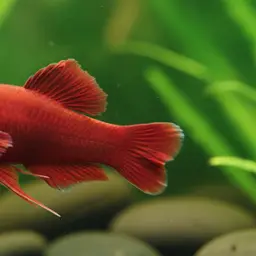
Red Lyretail Swordtail
✨AI

Red Lyretail Swordtail

Fish

Xiphophorus helleri

A selectively bred swordtail with a ruffled dorsal fin and deep crimson color throughout.
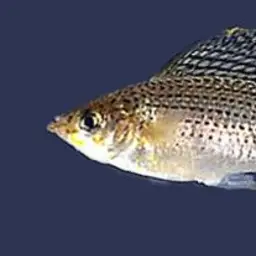
Sailfin Molly

Sailfin Molly

Fish

Poecilia latipinna

The male's enormous sail-like dorsal fin makes this livebearer instantly recognizable.
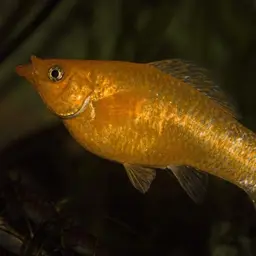
Sailfin Molly

Sailfin Molly

Fish

Poecilia velifera

The towering dorsal fin of this livebearer is a true showpiece when conditions are right.
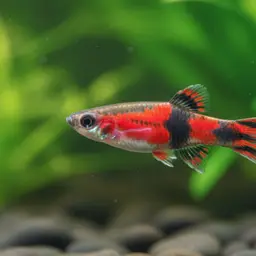
Scarlet Livebearer
✨AI

Scarlet Livebearer

Fish

Micropoecilia picta

A pint-sized livebearer with a taste for brackish water and bold color.

Popular strains & varieties

Named color morphs and bred strains across livebearers species.

Black Mollystrain of MollyJet black from nose to tail fin, with no iridescence or color break β€” that uniform velvety darkness is the hallmark of a well-bred Black Molly. Watch for faded flanks or brownish undertones when selecting fish; these signal poor genetics or stress. Males are slimmer with a visible gonopodium; females get impressively deep-bodied as they mature. One of the hardiest molly variants, tolerant of a wide salinity range and forgiving of beginner mistakes. A true all-black specimen under good lighting looks almost lacquered, making it one of the most striking fish you can keep in a community tank.Mickey Mouse Platystrain of PlatyNamed for the unmistakable trio of black spots at the base of the tail β€” one large central spot flanked by two smaller ones β€” that form a silhouette resembling cartoon ears. The body is typically golden-yellow to orange, making the caudal marking pop dramatically. It's one of the most recognizable platy patterns in the hobby and a perennial bestseller. Fish vary in how crisp the 'mouse' marking is; look for clean, round spots rather than blurry smudges when selecting. Body color can vary between breeders, but the tail spot is the defining feature. Peaceful, hardy, and beginner-friendly.Red Platystrain of PlatyA solid, saturated red covering the entire body and fins with little to no patterning β€” what you see is a fish that looks almost lacquered. The intensity varies considerably between breeders; the best specimens are a deep brick or blood red rather than a washed-out orange. When selecting, avoid fish with pale bellies or yellow tinting around the head, as these tend to fade further under home conditions. One of the oldest and most widely kept platy strains, it remains a benchmark for comparing color depth in other red-based varieties.Red Swordtailstrain of SwordtailThe classic hobby swordtail β€” body is a solid, saturated brick-to-cherry red with a yellow-edged sword on the male. Females are plumper and swordless but carry the same red coloration. This is the benchmark strain; if the red looks washed-out or patchy at the store, pass on it. Well-bred individuals should show even color from gill plate to caudal peduncle with no white belly creep. One of the hardiest ornamental strains available, tolerating a wide pH range and forgiving of beginner mistakes. A mainstay of the hobby for over a century.Tuxedostrain of GuppyThe Tuxedo's signature is a clean, sharply defined black or dark-blue patch covering the rear half of the body, contrasting against a lighter front β€” like a fish wearing formal wear. The color division should be crisp, not faded or blotchy; select specimens where the boundary is well-defined. Tail color varies widely across breeders β€” red, blue, and yellow are all common. Hardy and widely available, Tuxedos are a great entry point into pattern-focused guppy keeping. Watch for line quality, as mass-produced Tuxedos often show muddled patterning.Cobrastrain of GuppyCobras display a distinctive rosette or vertical bar pattern on the body β€” often described as snake-like scales or a chain-link texture β€” overlaid on a yellow, gold, or silver base. The pattern should be dense and well-organized across the flank, not sparse or irregular. Tails are typically large and can display lace or mosaic patterning that complements the body. Cobras are a competitive show strain and respond well to high-quality feeding to intensify pattern contrast. Avoid specimens with washed-out ground color, as it dulls the visual impact.Dalmatian Mollystrain of MollyWhite base coloration scattered with irregular black spots and blotches β€” every individual is uniquely patterned, which gives this variety a lot of visual personality in a group. The spotting should be bold and well-defined; avoid fish where the black has bled into muddy gray patches, as that typically means the strain has weakened. Dalmatians tend to be slightly more light-sensitive during acclimation than plain-colored mollies, so dim the tank when introducing new arrivals. A group of six or more shows off the pattern variation nicely and looks striking against dark substrate.Green Swordtailstrain of SwordtailMales display an olive-to-bronze body with a distinct red or dark lateral stripe running from behind the eye to the caudal peduncle, and a sword that is yellow-green with a black edge. The overall look is subtler than red strains but highly attractive under good lighting. This strain sits closest to the wild-type pattern while still being a product of selective breeding for consistent coloration and finnage. Look for a clearly defined lateral stripe and a clean sword edge β€” faded striping usually indicates poor-quality stock. Adapts well to planted tanks.Sunset Platystrain of PlatyA rich gradient from deep orange at the front of the body to a vivid yellow toward the tail, mimicking the colors of a tropical sunset. The fins often pick up the same warm hues, sometimes with a faint dark edging on the dorsal. Under good lighting this variety glows β€” it's genuinely one of the most attractive mass-market platyfish. Quality varies between suppliers; the best specimens show a smooth, well-defined color transition rather than a patchy blend. Hardy and adaptable. Pairs well with planted tanks where the orange pops against green foliage.Sunset Platystrain of PlatyThe body transitions from a warm golden-orange at the midsection into a deeper reddish-orange or tangerine toward the tail, mimicking the gradient of a sunset sky. The caudal fin often picks up extra color intensity, making the rear half of the fish visually pop. Quality specimens should show a clean, smooth gradient rather than an abrupt color break. Females tend to be less vivid than males but still carry the warm tones well. This is one of the more photogenic platy strains and holds color reliably under good feeding and lighting.Black Swordtailstrain of SwordtailA striking, dark strain where heavy melanophore expression covers most of the body in deep black or charcoal, often with a subtle iridescent sheen under light. Males carry a black-edged sword that blends dramatically into the body. The best specimens are nearly uniform black with minimal mottling or pale patches on the flanks. Be aware that pure black swordtails can be prone to melanoma β€” a real concern with highly melanistic lines β€” so source from reputable breeders who cull aggressively. Pairs beautifully with high-contrast tankmates in a well-lit aquascape.King Cobrastrain of GuppyAn enhanced version of the Cobra, the King Cobra layers the characteristic rosette body pattern onto a larger, more imposing fish with a full, heavily patterned tail β€” often a delta or fantail shape with lace or snakeskin detailing extending into the fins. The gold or yellow body with dense black scaling gives these fish a jeweled appearance. Show-quality King Cobras demand excellent water quality and consistent feeding; the pattern degrades noticeably under stress. They're stunning but require more commitment than standard Cobras to maintain peak condition.Mickey Mouse Platystrain of PlatyNamed for the unmistakable black marking at the base of the caudal fin β€” one large central spot flanked by two smaller ones β€” that forms a silhouette resembling the famous cartoon mouse ears. The body is typically golden-yellow to pale orange, providing contrast that makes the tail marking highly visible. It's one of the most recognizable platy patterns and a perennial favorite for community tanks and beginners. The spot pattern is genetically dominant and usually breeds true. Look for crisp, well-defined spots rather than smudged or irregular markings when choosing stock.Red Platystrain of PlatyA solidly built fish covered in deep, uniform red from nose to caudal fin, with fins that match or deepen in hue. The best specimens are a rich brick-to-blood red with no brassy or orange cast β€” a sign of well-maintained selective breeding lines. Lesser stock often fades toward orange under stress or poor nutrition; a high-carotenoid diet helps maintain intensity. One of the foundational platy varieties and a staple of the hobby for decades. Extremely adaptable and peaceful, making it an easy recommendation for community tanks at any skill level.Silver Mollystrain of MollyA clean, bright silver-white body with a subtle iridescent sheen that catches light differently depending on the angle β€” under good aquarium lighting these fish almost glow. They lack the yellowish cast of Gold Dust and the spotting of Dalmatians, making them one of the most visually simple mollies, but that simplicity is the point. Select specimens with intact, symmetrical fins and a full silver coat with no patchy yellowing. Silver Mollies are extremely common in the hobby, which means quality can vary widely; look for fish from tanks that show active, upright behavior. Hardy and peaceful.Blue Platystrain of PlatyDisplays a steely blue-gray to slate coloration over the body, often with a subtle iridescent sheen under good lighting. True blues are not as vivid as neon-colored species but have an understated elegance that experienced keepers appreciate. The color depth varies considerably between lines β€” some lean heavily gray while better-quality strains show a distinctly blue metallic wash. Fins are typically the same tone as the body. Not as widely available as red or sunset varieties, which means quality control can be inconsistent at chain pet stores; seek out specialty breeders for the best color expression.
Page 1 of 2Next β†’